

Editorial
Far fewer holiday light strings ending up in landfills
 December 17th, 2010
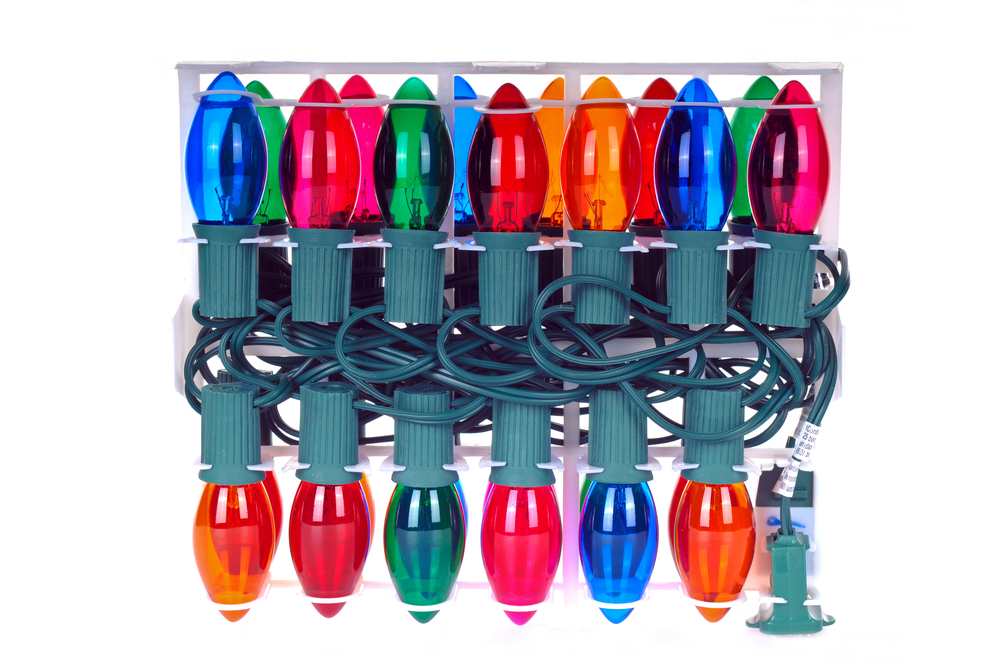 Who hasn’t endured the frustration that Clark Griswold experienced when his holiday lights display in “National Lampoon’s Christmas Vacation” wouldn’t turn on?
It may not be that dramatic for most of us, and more likely, it’s only the occasional string of Christmas lights that don’t work either before, during or after the holiday display season.
And what has happened to that string of Christmas lights for the past several decades? Into the garbage and eventually into our landfills.
In the past two years, the movement to provide recycling for used Christmas lights has picked up a lot of momentum. It appears it will become even more common in years to come, especially as consumers discard old incandescent lights for energy-saving LED strings.
Tons of worn-out lights have cluttered landfills, and environmentalists point out that the plastic wiring common with holiday lights could take thousands of years to decompose. Animal lovers say a string of lights in a landfill can choke or entangle a small animal as easily as the plastic rings used on six-packs of soda.
As we now enter the age of recycling the lights that at one time made the holidays bright in large or small displays at our homes, businesses or on our community streets and parks, there is finally an alternative to just tossing them out.
Consider that a company such as Elgin Recycling Inc., servicing about 24 communities in northern Illinois with a Christmas lights recycling program, collected 9,949 pounds of used lights in its first year with only 12 communities involved, it is not hard to imagine what a nationwide effort could accomplish.
Many recycling firms or scrap collecting companies across the country are making recycling bins available at various community locations for used Christmas lights. Home Depot stores collect lights for a couple of weeks during the holiday seasons, and various community organizations or colleges are getting involved in providing the service.
What happens to your old lights once you drop them in a recycling container for pickup?
Generally, the lights will be processed and any material that cannot be recycled (i.e. loose bulbs) is discarded. When hundreds of light sets have been collected, a recycling company will take them to a recycling facility for shredding. Afterward, the pieces are processed and sorted into the various components that make up the lights (pvc, glass, copper).
In the recycling market, the chances of finding a buyer and future uses for the recycle materials are enhanced when something is being recycled in volume.
The sheer volume of holiday lights throughout the world provides hope that our landfills will be far less cluttered and a use for the plastics and glass will be more practical because of the quantities available.
 Author:
  Posted in
What is Leadership in Energy and Environmental Design, (LEED)?
November 29th, 2010
 This is a program run by the U.S. Green Building Council. The USGBC is non-governmental organization, with over 20,000 members and 79 chapters. Its sole purpose, to promote green buildings.
Here’s a simplified look at how LEED works. Architects, developers and builders who want their buildings to be green work towards getting LEED certification. LEED certification comes when they earn a certain number of points. Points are awarded when they meet certain goals in six areas:
Sustainable Sites – that means they choose the right place to build their building, and work to make sure their building fits the site. Frank Lloyd Wright would have approved of this one – he was known for making his structures fit into the site, rather than changing the site to fit the structure.
Water Efficiency – obviously, that they take into consideration water usage of the building. Using landscaping that doesn’t need too much water, planning ways for rainwater to be efficiently taken care of, maybe even finding ways to use “brown” water for plantings.
Energy and Atmosphere – that the building is energy efficient, doesn’t create of lot of air pollution, maybe uses solar panels.
Materials and Resources – LEED emphasizes using recycled materials and sustainable materials – such as bamboo floors instead of regular hardwood floors, kitchen countertops made from recycled glass rather than granite, and carpets made from recycled plastic pop bottles rather than from virgin petroleum, etc.
Indoor Environmental Quality – this means the air the occupants breathe is fresh, so they use paints with low volatile organic compounds, they use adhesives that don’t release noxious fumes, they put in more hard floors than carpets, and when they do put in carpets, they’re the kind that don’t have a lot of fumes.
Innovation and Design Process – this is a category that allows LEED points to be earned for going above and beyond the other requirements.
To learn more: http://www.usgbc.org
Your Employees Want to be Green
November 22nd, 2010
 You might think your employees do their best because they need the paycheck. They probably DO need the paycheck, but an awful lot of slackers collect a paycheck and don’t care a lick about the work they do to earn it. Those aren’t the kind of employees you want. You want employees who care about your mission, and who come to work because they believe it’s a great place to work. How do you get your employees to focus on more than greenbacks? By focusing your business on the other kind of green – environmentalism.
A recent survey of over 4,000 people by the recruitment job site MonsterTRAK found that 80 percent of young professionals are interested in securing a job that has a positive impact on the environment. And 90 percent of the respondents said they would rather work for an environmentally friendly employer.
Consider how those statistics affect your recruitment. If 90 percent of your prospective employees would rather work for a green company, being green is going to make filling your openings much easier. If you’re competing with the other reprographics shop in town for the latest computer school graduate – or the experienced sign maker who just moved to town – you want every advantage you can have. Being green is a big one.
Why do your employees care? Because they want to feel that their work – even if it has nothing directly to do with the environment – is helping in some small way. If your firm is green, your employees will be proud to be part of the organization.
“Your company may produce widgets, but if you are socially responsible and contribute to the community, and you’re environmentally responsible and among the leaders in your industry at helping or protecting the environment, then people identify with that. It makes them want to stay a part of the company,” wrote Frank Alix, CEO of Powerspan Corp., in an essay titled Better Business Practices for a Better Environment.
A 2007 survey by Kenexa Research Institute backed up this idea. The survey looked at companies with strong “corporate social responsibility” (CSR) initiatives, which include environmental aspects, and found that employees were happier and stayed longer at companies with those programs.
“An organization’s CSR efforts also positively affect an employee’s personal outlook of the future, satisfaction with their job and confidence in the company’s future,” Kenexa reports.“Employees who rate their organization as having a strong CSR culture outscored those who view their company’s CSR activities as weak on each of these key indicators. Furthermore, employees who work in a strong CSR culture are more favorable toward their colleagues’ willingness to do the very best for the organization, and have more favorable views of their company’s ability to motivate people to work hard and put in extra effort.”
Full steam ahead for geothermal
November 12th, 2010
 Geothermal Energy Association Executive Director Karl Gawell recently announced the findings of new industry reports that show the geothermal industry will soon add thousands of jobs as dozens of new clean geothermal power plants come online or enter advanced stages of development.
The GEA report—“Green Jobs through Geothermal Energy”—found that the federal stimulus, tax incentives and strong state renewable standards continue to fuel the growth in geothermal power and job creation. The full benefits of the stimulus to the geothermal industry have yet to be realized. About 95 percent of the projects receiving ARRA funding are either less than 50 percent complete or have yet to break ground.
“Recovery Act funding is going to make a huge difference over the next year to push projects to completion and create more jobs. The majority of the ARRA investment will really start to pay dividends for the economy in 2011,” said Gawell.
GEA anticipates that 2011 will be a high-point of geothermal activity in the U.S. under the stimulus legislation. Approximately 500 to 700 Megawatts of power projects will enter their final construction phase in 2011, adding 3,000 construction jobs, primarily in Nevada and California.
ARRA also appears to have drawn a diverse group into the geothermal sector. Almost half of the Geothermal Technologies Program awards from the stimulus went to non-industry entities such as colleges and universities; cities, counties, and other state and local institutions; tribal entities; and the Department of Energy’s National Labs.
As more geothermal industry jobs are being created, a number of colleges and universities across the country are emerging with undergraduate, graduate, and certification programs related to geothermal. GEA also compiled the “U.S. Geothermal Education and Training Guide” that details 22 undergraduate and graduate programs at U.S. colleges and universities. Additionally, 31 schools have research opportunities in geothermal studies available to students.
“To keep creating jobs in the geothermal industry, we must keep getting talented individuals coming into the industry. The programs at these leading schools will develop the next generation of geothermal professionals,” Gawell said.
Going green is not a costly venture
October 27th, 2010
 Money is tight these days, so it would stand to reason that most people would be anxious to embrace lifestyle changes that cut costs, such as incorporating “green” appliances and other devices in their homes to save energy. But many fear that going green can carry a high price tag, which is true in some cases. If you own an older home, “green” upgrades could call for an initial upfront cost that doesn’t fit in the budget.
The practical approach would be to consider those eco-conscious ideas that don’t cost much money and start to reap the benefit to your wallet and family budget immediately. How about something as simple as installing dimmer switches, especially if you haven’t made the switch away from incandescent light bulbs. Dimmer switches, which don’t cost much more than $10, will extend the life of your light bulbs and trim energy costs.
Outdoor lighting fixtures that use motion sensors obviously save energy costs. Likewise, sensors are a good idea in places where we tend to leave lights on and forget about them, in our basements and guest rooms.
The programmable thermostat is another item that has been around for years and has proven to save as much as $200 a year off heating and air-conditioning expenses. For about $50, it pays for itself after just a few months.
How many of us have an insulating blanket on our hot water heaters? The U. S. Dept. of Energy reports that having this item, which costs about $20, can lower water-heating costs by nearly 10 percent.
But what do you pay to heat your water? A good way to find out is by adding a $15 plug-load monitor, which can go into any outlet in which you plug in an appliance. The monitor provides information about how much power is being used out of that appliance, as well as the periods of time it is used the most. Knowing this information can help in determining when to turn certain devices off, or get a programmable monitor that can lower power at certain times.
Ceiling fans can be found in most houses these days. If we operate them in a clockwise fashion during the winter in order to push warmer air down, and reverse the motion during the summer to circulate cool air, it will translate to lower energy costs.
Another simple household trick that costs very little is to make sure weather stripping around doors and windows is stable. A roll of weather stripping would be about $7 spent for up to 15 percent savings in heating and cooling costs. And how about our precious resource of water? You can reduce water usage by replacing the aerators, at about $5 each, on your faucets.
And then there’s the old standbys that are hopefully becoming lifestyle habits: wash clothes in cold water; clean the lint screen on your dryer regularly; dust off the coils behind the refrigerator; turn off your computers at night; and unplug electronics and appliances when they are not being used.
Schools illustrate how energy savings translate into significant cash savings
October 21st, 2010
 Adopting energy-saving tips and converting to “green” philosophies in a workplace sounds fairly easy in many cases. You get recycling bins for employees, you encourage workers to keep the thermostat lower, you keep computers and lights off during non-working hours. But what if that workplace is a significant operation with hundreds of employees and several buildings – like a school district?
School districts, college campuses and large church parishes are good examples of organizations seeking help from Energy Star companies with expertise that goes far beyond just handing out recycling bins.
Companies such as Energy Education Inc. are proving to be key components of school district initiatives to cut energy costs. They are proving that significant money can be slashed from already-strapped school district budgets by undertaking a major effort to reduce consumption of electricity, gas, fuel oil and water.
Batavia School Dist. 101 in Batavia, Ill., recently reported that it has saved more than $100,000 in energy costs already in 2010, and could be close to $300,000 in savings by year-end. The district is in the first year of a four-year deal with Energy Education Inc. to institute a program and new habits that drastically change the district’s energy consumption.
Energy Education Inc. predicts that over a 10-year period, a school district like Batavia’s with one high school, a middle school and four elementary schools could enjoy a net savings of $3.9 million. This is a range that would be common for most districts or colleges that would take such an organized approach to reducing energy costs, the company claims.
Energy Education Inc. examines all facets of energy use, from making sure equipment is turned off to examining a building’s occupancy at any given time, and adjusting cooling or heating accordingly. But it’s more precise in its measurements, calculating moisture and humidity levels.
In addition to modifying human behavior and encouraging energy-saving habits, a program instituting this kind of change examines the HVAC systems, electrical systems, and the motors and drives on all equipment; conducts energy audits; searches buildings for energy leaks; considers all turf management and irrigation setups; studies the standards for boilers and steam systems; and implements many other LEED and Energy Star (government-backed symbol for reliable energy savings information) standards and practices.
Companies with expertise such as Energy Education Inc. tell clients that a self-implement energy savings program can result in cost savings between zero and 7 percent. But with the help of experts and a thorough examination of all facets of an energy program, those savings could shoot up to 30 percent or higher.
Because the employees of educational institutions should be concentrating on educating students, it is a difficult task for school districts to implement their own energy-savings programs. School districts would be wise to consider a company with expertise in energy conservation that will assess the district’s situation and put together a plan. When a company like Energy Education Inc. can claim to save billions of dollars in energy costs when several school districts across the nation buy into green habits, there are few better examples of conservation taking hold in the United States.
Disaster cleanups are going green
October 7th, 2010
 Turn on the TV news, flip open a newspaper, or go online, and there’s a good chance you will be hearing or reading about a weather disaster in some part of the world that resulted in homes being partially ruined or entirely destroyed.
These types of disasters, whether from floods, hurricanes, tornadoes, earthquakes or fires, are getting more attention as part of the growing market for sustainable and green building materials.
The reason? Cleanups, restorations and rebuilding are taking place with far more attention to using “green” products.
As if weather disasters aren’t enough, rebuilding companies also have plenty of major restoration projects related to mold teardowns. And some cleanup projects reveal mold problems once restoration starts.
DKI Services Corp., with headquarters in Wood Dale, IL, is considered the largest disaster restoration contracting organization in North America. It is also the only certified green services restoration organization in the United States, offering services such as emergency response, water damage mitigation, fire and contents cleaning, mold remediation and complete reconstruction.
Basically, a company like DKI works to restore a home to its pre-loss condition, and its franchise members are trained to provide remediation services that satisfy insurance requirements while also using the products and chemicals commonly regarded as efficient “green” products in the marketplace.
This is especially important when the structure being restored was a “green” home to begin with. Specialists well-versed in green building materials and safer, more effective, chemical cleaners are able to assess a building and quickly determine what green products could be used in the remediation process.
An assessment of this nature now calls for an understanding of the different green rating systems in the United States and also knowing how to interpret insurance coverage and how it relates to the materials being used in restoration.
Mold removal has become a prominent issue in the past two decades, and it remains one of the most hazardous cleanup jobs that can be undertaken. Companies trained in this specialty have long been versed in how to do it while also keeping the environment safe.
Typically, a mold removal process will include an area cordoned off with plastic and workers with respirators and protective clothing using air scrubbers to trap as many airborne particles as possible, but done in such a way as to not allow any air-borne mold spores to escape to the outdoors. Removal is done in plastic bags and sealed before being taken off the property.
No one likes to see a home destroyed by an act of nature, but the positive news is that a “green” rebuilding can take place, and other serious problems in the home can be uncovered and addressed.
In an interesting note, DKI’s service center in Houston, Texas was recently chosen to be part of the popular ABC-TV series “Extreme Makeover” in which it helped a family rebuild after the 2008 hurricane.
The DKI company, called 281-Flooded, assisted by providing drying and cleaning services, including dehumidification and round-the-clock monitoring and labor, to expedite the drying of the drywall, primer, and paint in the interior and exterior of the home. The project was completed the week of July 25, 2010 in Houston, TX.
Renters can go ‘green’ even without landlord’s help
September 23rd, 2010
News about the conservation initiatives taking place in our homes generally centers on what “green” features developers and builders are offering, and what homeowners or new homebuyers are seeking in energy savings and use of more sustainable products. But what about the millions of people worldwide who rent their living space, be it in apartments or homes?
There’s no reason individuals can’t take it upon themselves to turn their rental unit into a more eco-friendly space, cutting their utility bills and perhaps even convincing the landlord to pass along some of the cost savings by lowering the monthly rent. There are many things a renter can do without any special requests, or even input, from a landlord.
The simplest first step is to recycle – and use recycled items, such as used furniture and even clothing – anything that would keep these types of items out of landfills.
Saving water in a rented apartment may not sound easy, but it’s doable. Place a brick in the toilet tank so it uses less water, like a low-flow toilet. Reuse bathwater or dishwater, with the aid of natural biodegradable soap, to water indoor or outdoor plants. Water monitors for the shower are available, and some even set off an alarm when you reach a pre-set limit on water use.
The discipline of simply using less electricity by shutting off lights and lowering the thermostat is obvious. Renters may also discover that their electric company offers renewable clean electricity at what may amount to only a slight increase in their payment. And it also is not impossible for a renter to buy a solar panel that can hang from a window ledge or clip onto a roof gutter or balcony.
There is no doubt that apartment owners are feeling the squeeze of the weak economy of the past three years, so convincing the landlords of eco-friendly investments might prove to be quite difficult. The trick is to document and keep track of money-saving improvements that the landlord can easily calculate and understand.
Many renters are now requesting what is being called a “green lease.” Under that setup, the renter and landlord agree to split the cost of eco-friendly upgrades and share in the cost savings over a period of time documented in the lease.
Landlords who are in tune with these kind of savings are already beginning to install motion-sensor lighting, timers for sprinklers, and replacing old appliances with Energy-Star rated products. Pushing the landlord to caulk and tint windows and add programmable thermostats are other simple ways to save money over the long run.
In addition, renters can simply follow the conservation habits that are commonly known – unplug small appliances when not in use, put coffee grounds and vegetable and food scraps into a composter, grow your own fruit and vegetables in a window box, clean the coils of the refrigerator and keep the fridge and stove far apart, buy chemical-free cleaners, put aerators on faucets to save water, and use bio-degradable trash bags.
Alcoa’s bin helpful with recycling
September 17th, 2010
Alcoa is providing 50,000 recycling bins to organizations and communities throughout the U.S. this year in its effort to promote recycling of aluminum cans and other packaging material.
“Alcoa and the Aluminum Association have a goal of increasing the recycling rates of aluminum beverage cans in the U.S. from the current 54% to 75% by the year 2015,” said Greg Wittbecker, Alcoa Director of Recycling. “This bin distribution program is just one way that we’re trying to make it easier for people to recycle.”
Recycling aluminum cans provides benefits to the environment because it saves valuable landfill space, and the cans are infinitely recyclable. They can be used, recycled, and back on the store shelf as a new beverage can in less than 60 days. And, it takes 95% less energy to make a can from recycled aluminum than from raw materials. Aluminum is also the most valuable material in the recycling bin. Although by weight it is less than 2% of the country’s recycled stream, aluminum generates 40% of the revenue to sustain all recycling programs.
“If we could get each American to recycle just one more can per week over what they already do, we could reach our 75% recycling goal,” said Wittbecker.
Alcoa Recycling first started providing bins in 2008 and has given bins to municipalities, colleges, Native American tribes and community-based organizations in 19 states.
After green roof, a green wall coming next?
September 7th, 2010
With Chicago laying claim to having the most “green” roofs of any city in North America, it stands to reason that the next building section that will be getting some notoriety in this part of the country will be the “green” wall.
Rooftop decks, gardens and vegetation account for about 7 million square feet of green space in the city of Chicago, with the city government setting an example with a rooftop garden atop the City Hall building.
The city has burst into the global spotlight in this environmental push since Mayor Richard Daley became a major booster after he learned about green-roof construction and design during a visit to Hamburg, Germany in 1997.
Still, there remains debate about whether Chicago has really forged ahead in this area, or if the movement remains in an early stage, with future design and benefits still being tapped.
Regardless of the environmental benefits – and there are many with energy savings, pollution control and natural noise buffers – the dawn of the green rooftop era appears to have descended into the green wall era.
The creation of a “living wall” within a structure may become more prevalent, with a current example unfolding at the Greenbelt Cultural Center under construction in North Chicago by the Lake County Forest Preserve.
The green wall being considered would be the first of its kind in the United States to use plants to filter and clean indoor air.
Proponents of the green wall project say it is much more than just a wall with plants. They view it as a key component of a building’s entire air-handling system, citing the plants’ root systems as a key factor in cleaning as much as 80 percent of volatile organic compounds in the area such as those coming from solvents and cleaning agents, building materials and carpets. They also estimate an energy savings of $600 per year with the green wall, but also view it as a centerpiece feature of a building and an educational tool.
The wall being planned for the center in Lake County would be 510 square feet, with plants installed in a mesh-like growing medium, rather than soil, with the mesh connected to perforated pipes that are in turn connected to the building’s air-handling system.
Nedlaw Living Walls of Canada is the manufacturer of the green wall system being considered. The company claims to be the only one to use plant walls as bio-filters in controlling indoor air quality. Basically, the “dirty air” is forced into the system and comes in contact with water that is constantly flowing within the wall. The pollutants move from the air into the water and are destroyed by microbes on the plant roots.
Some describe the phenomenon as simply as this: An indoor green wall mimics what is happening with the air we breath outside every day.
 Follow Us on Facebook
 Follow Please Conserve on Twitter
 Subscribe to our RSS Feed
advertisement
advertisement
