

Author Archive
Dave Heun
Dave Heun is a freelance writer and editor with more than 30 years of experience in publishing and digital media. Heun is a graduate of Southern Illinois University, where he received a bachelor of arts degree in journalism. He worked as a reporter and editor for 24 years at the Kane County Chronicle, and spent seven years in marketing and communications in the medical laser industry. He has also been a freelance writer for the past eight years with the Daily Herald in the Chicago suburbs. His writing experience covers many facets from business, the arts, and sports, to environmental issues and high-energy physics. Part of his role with the medical equipment company called for working with environmental consultants and recycling companies involved with the recycling of scrap materials from old medical equipment, particularly surgical lasers.
LED trying to take hold in the outdoor light-fixture market
 February 10th, 2011
 The federal government would like to see all incandescent bulbs replaced with more energy-efficient lighting by 2014. Most people have begun replacing traditional bulbs with new compact fluorescent lamps (CFLs)—and making the adjustment to the “new look” of the energy-saving and longer-lasting bulbs. Slower to gain acceptance are LEDs or light-emitting diodes, as the bulb of the future. Many home developers know that the LED light fixtures, especially for outdoor lighting, are readily available, but in many cases too costly for the consumer, even though they are money-savers over a long period of time.
Those who sell LED lighting to developers and consumers also admit there is some concern over the fixtures, which are thrown out when the bulb goes out, even though this could take years. More waste in the landfill offsets the environmental benefits of the energy savings to some degree. But as these issues are ironed out, LED will eventually become a standard feature of lighting in home and commercial buildings, say the experts.
For now, however, the replacement of incandescent bulbs with CFLs is an excellent choice, especially for outdoor lighting fixtures because they are more energy-efficient and handle cold well, plus they throw out a lot of light. The key remains to keep the light pointing downward, to illuminate the human activity, rather than at an angle that wastes light and contributes to light pollution in the sky—a cause taken up by environmental activists primarily in the West Coast states.
 Author:
  Posted in
Conservation takes hold on the slopes
January 21st, 2011
 For far too long, skiers worldwide have generally accepted the fact that construction of a ski resort can have a significant impact on the environment.
Consider what happens when a ski resort is built: Trees are cleared to make way for the ski slopes, thus disrupting wildlife habits and vegetation and altering natural watersheds. Cars driving to the resort area create pollution, as does equipment used to make snow, maintain the slopes or mow grass during summer months, not to mention heating buildings during cold winters. In some cases, factories that make clothing and equipment for skiing could be located nearby, and they create even more pollution.
It comes as no surprise then that ski resorts are quickly becoming examples of how an industry can build green initiatives into its operations and make a significant difference in reducing its carbon footprint.
So much so, that a group called the Ski Area Citizens’ Coalition has been formed to rate and survey ski resorts based on criteria from local conservation groups and the U.S. Forest Service.
The emphasis for ski resorts has been to have general conservation and environment-friendly policies and procedures in place, specifically for habitat protection, watershed protection and addressing climate change.
The coalition looks at all aspects of a ski resort operation, from recycling to future plans – and sometimes those future plans don’t sit well. It is generally believed that smaller ski resorts grade better than those that are constantly expanding, because that expansion is sure to affect the environment.
Some ski resorts have been on board with energy savings for many years. Aspen Ski Country in Colorado has one of the largest solar-power systems in the industry, which has been in place since 1997. It also fuels its trail-grooming machines with biodiesel fuel.
Park City Mountain Resort in Utah has reported that it uses renewable energy to power chair lifts and has purchased more efficient snow-making equipment, while also cutting back on its snowmobile fleet.
In a gesture that proves no conservation policy is too small to make a difference, the resort also has been using recycled paper for its trail maps and began using regular dishes rather than disposable ones in all of its lodges.
Other examples for resorts come in the form of using biofuel from recycled cooking oil to power shuttles, and using non-petroleum-based cleaners for all housekeeping.
As more ski resorts take hold of these conservation methods, skiers across the world will be able to say they participate in a sport trying to make an environmental difference.
College campuses becoming ‘green’ models
January 8th, 2011
 If the conservation and “green” movement is going to take hold as a routine aspect of American life, it stands to reason that our nation’s universities and college campuses are going to be the breeding ground for such knowledge.
The research and innovation taking place in labs and classrooms at institutions of higher learning is a key – but many universities are also becoming visible examples of what can be done by establishing their own green policies and campus sustainability projects.
This can be seen in obvious ways, whether by the construction of a green roof on a campus building, or the placement of recycled materials to create walkway tiles, or the strategic planting of trees and shrubs for landscaping that reduces water runoff. These types of small projects become visible examples as a classroom “lab” that stress the importance of environmental issues for students.
But a Campus Sustainability Project (CSP) takes everything a step further and is created to develop an online database of environmental management data, policies, and programs for an entire campus. It is a way to conduct research on sustainability in higher education and provide educators and students with resources to help achieve campus sustainability.
One such example is taking place at Southern Illinois University in Carbondale, where the university has completed many retrofitting projects throughout its buildings. One campus building provides a perfect example, as it was constructed in the late 1960’s as a guesthouse for prestigious visitors. It currently houses campus offices. Building construction techniques from 50 years ago, coupled with a different use from the building’s original intent, ultimately results in a building design that wastes energy. A project to decrease electric costs at this building cut power usage in half.
A major energy consumer in buildings is the heating, ventilating and air conditioning systems, which result in older appliances needing to be retrofitted.
Through projects such as these, it has been learned that a key component to cope with inefficient equipment is to incorporate a geothermal heat pump in the building. The heat pump will deliver heated or cooled water year round for a fraction of the actual cost of heating and cooling. Zone dampers can also be implemented in a building to effectively divide it into different climate zones while reducing heating and cooling overlapping.
Lighting of a building can also be assessed, usually revealing that some light fixtures are still incandescent. Those incandescent light bulbs can be replaced with compact fluorescent lamps. This replacement not only is easy and inexpensive, but also pays for itself fairly quickly.
In older buildings on our nation’s campuses, it will also become common to retrofit archaic appliances, improve attic insulation and seal any leaks in ducts.
The end result will be our nation’s campuses being the prime example of conservation, while emphasizing to young minds what “going green” really means.
Expect dry cleaners to start considering alternatives
December 31st, 2010
 Taking those white shirts or suits, or delicate dresses, to the dry cleaners has been a standard routine of daily life for decades. How would we get that wine spill off of our sport coat without the neighborhood dry cleaners business?
But dry cleaners are also entering the era of heightened awareness of everything “green” and, as such, are getting closer scrutiny regarding claims of “green” or “organic” dry cleaning.
There is no regulation of the dry cleaning business in regards to what qualifies them as more “green” than others, or if the term “organic” is rightfully justified.
Still, alternatives to the use of perc (perchlorol-ethylene) as a major cleaning agent are being considered. Good Housekeeping magazine recently reported that about 85 percent of dry cleaners use perc, which, while safe for the customer wearing the clothes, is strictly regulated because if it is not handled properly it can become a toxic pollutant and dangerous to those who work at a dry cleaners business.
A federal law has called for the phasing out of perc being used at dry cleaners located in residential buildings by the year 2020. With this sort of reasoning becoming more widespread, it is likely we’ll see cleaning businesses moving toward safer alternatives.
Of those, a liquid CO2 cleaning process already deemed safe by the EPA, may come into more use. Because it reuses most of its CO2, it is not considered as a dangerous greenhouse gas contributor.
A new cleanser called Green Earth, which is a liquid silicone, makes claims to degrade to sand, CO2 and water, but the EPA has to give this product further study.
Wet cleaning is always a possible alternative, but it does have those age-old problems of discoloring or shrinking some fabrics. It is likely that those in the cleaning business will come up with ways for wet cleaning to avoid some of those pitfalls.
It also is likely that dry cleaners will begin to use hydrocarbon solvents because they can easily be used in current perc machines. Because they are petroleum-based, hydrocarbon solvents must also be handled with extreme care, but the EPA views them as products that are engineered to biodegrade much faster than perc.
Consumers will certainly continue to measure the progress of dry cleaners “going green” simply on the basis of how well the alternative processes clean their clothes.
In reviews by magazines and consumer watchdogs, Green Earth has been getting praise as a good cleaner for the usual culprits – coffee, lipstick and oil stains. CO2 cleaning is generally considered the least likely to shrink your clothes, while the wet cleaners continue to struggle with that ornery lipstick, oil and ink.
Perc is generally considered the best for oil and lipstick stains, but not always reliable on ink and wine, while the perc alternative hydrocarbon has been considered the best for stains on wool products. But with cotton clothing, the hydrocarbon cleaner doesn’t fare as well.
Developers, recyclers find ‘path’ to keep shingles from landfills
December 22nd, 2010
 Recyclers and developers across the country are teaming up in an effort to recycle an item that has been piling up in our landfills for decades. Tons of asphalt shingles, a petroleum-based product, have been going into landfills during new home construction or after demolition or re-roofing of older homes and businesses.
A movement to keep roof shingles out of the waste stream has been catching on, and its effectiveness can be illustrated by a Grand Rapids, Mich., company, Crutchall Resource Recycling, which ground up 30,000 tons of shingles in only three months last summer.
In areas of the country in which building homes was robust before the economic downturn, it is estimated that 70,000 to 100,000 tons of shingles could end up in a single county’s landfills in just one year.
The Northeast Recycling Council estimates that approximately two-thirds of the roofing shingles in the United States are made of asphalt. With discarded asphalt shingles taking up landfill space and polluting the environment by releasing carcinogenic hydrocarbons into the ground, the recycling companies turned to a logical use for ground up shingles – repairing or paving roads as part of the asphalt hot mix.
Developers with a reputation for smooth roads in their subdivisions are starting to use recycled shingles to create “green” streets. A subdivision called Tall Oaks in Elgin, Ill., recently had eight miles of roads constructed with recycled shingles through developer Wyndham Deerpoint Homes.
In addition to using recycled shingles, the “green” roads also are designed to last longer while reducing the amount of asphalt, sand and oil normally needed for paving.
Consumers can help with this cause by making sure their roofing company has a recycling program, or letting it be known that they would like to donate used shingles to environmentally-conscious builders who are able to roof certain homes with used shingles.
Heritage Environmental Services has shingle recycling drop-off locations in seven cities, pushing the practice as a much less expensive alternative than paying the fees to dump them in landfills.
Because shingles are made up of concrete and bitumen — the black, oily material, or tar, that is a naturally-occurring byproduct of decomposed organic materials — environmentalists aren’t able to pinpoint exactly how long it would take for a shingle to decompose in a landfill.
The most common answer, it appears, is “forever.”
Far fewer holiday light strings ending up in landfills
December 17th, 2010
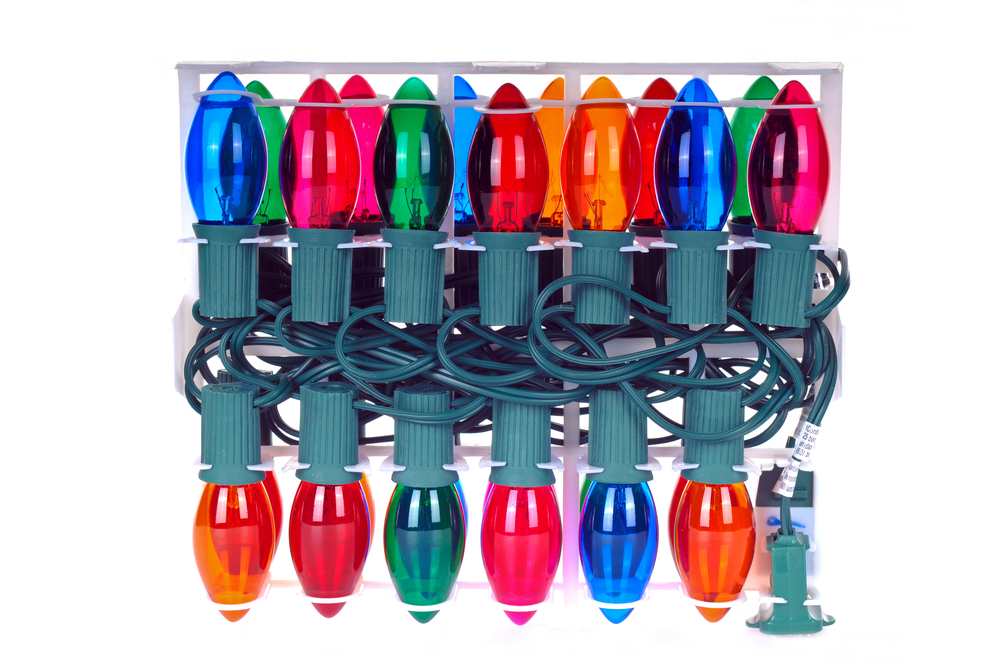 Who hasn’t endured the frustration that Clark Griswold experienced when his holiday lights display in “National Lampoon’s Christmas Vacation” wouldn’t turn on?
It may not be that dramatic for most of us, and more likely, it’s only the occasional string of Christmas lights that don’t work either before, during or after the holiday display season.
And what has happened to that string of Christmas lights for the past several decades? Into the garbage and eventually into our landfills.
In the past two years, the movement to provide recycling for used Christmas lights has picked up a lot of momentum. It appears it will become even more common in years to come, especially as consumers discard old incandescent lights for energy-saving LED strings.
Tons of worn-out lights have cluttered landfills, and environmentalists point out that the plastic wiring common with holiday lights could take thousands of years to decompose. Animal lovers say a string of lights in a landfill can choke or entangle a small animal as easily as the plastic rings used on six-packs of soda.
As we now enter the age of recycling the lights that at one time made the holidays bright in large or small displays at our homes, businesses or on our community streets and parks, there is finally an alternative to just tossing them out.
Consider that a company such as Elgin Recycling Inc., servicing about 24 communities in northern Illinois with a Christmas lights recycling program, collected 9,949 pounds of used lights in its first year with only 12 communities involved, it is not hard to imagine what a nationwide effort could accomplish.
Many recycling firms or scrap collecting companies across the country are making recycling bins available at various community locations for used Christmas lights. Home Depot stores collect lights for a couple of weeks during the holiday seasons, and various community organizations or colleges are getting involved in providing the service.
What happens to your old lights once you drop them in a recycling container for pickup?
Generally, the lights will be processed and any material that cannot be recycled (i.e. loose bulbs) is discarded. When hundreds of light sets have been collected, a recycling company will take them to a recycling facility for shredding. Afterward, the pieces are processed and sorted into the various components that make up the lights (pvc, glass, copper).
In the recycling market, the chances of finding a buyer and future uses for the recycle materials are enhanced when something is being recycled in volume.
The sheer volume of holiday lights throughout the world provides hope that our landfills will be far less cluttered and a use for the plastics and glass will be more practical because of the quantities available.
Artificial turf debate picks up green steam
December 9th, 2010
 The benefit of utilizing artificial turf as a standard feature on high school football fields across the nation is a debate gaining momentum – mostly because it cuts down on the cost of replacing or patching natural turf, watering it and lining it with chalk and/or paint. But the artificial turf question is relevant for businesses, airports, and as a general part of any landscaper’s plans.
The dramatic money savings in water and other maintenance, as well as artificial turf’s environmental benefits, can offset the thought of a little less natural green in our world. Granted, athletic departments at high schools operate with budgets that make it entirely impractical to consider the actual watering of a dry football or soccer field on a regular basis — but it’s that lack of water that can deteriorate a field. Or, it can be too much water during a rainy football season that renders a field a muddy swamp – eventually torn up and in need of major replanting and watering.
Some 40 years ago, when artificial turf made its debut at the Houston Astrodome, the surface was criticized because it could become as hard as concrete in an outdoor setting during the cold winter months, and it didn’t look like natural grass.
Today, the turfs being used are much softer and last up to 15 or 20 years. School districts and sports boosters are quick to point out how much water, turf and other maintenance costs can be saved over that period of time – with some estimates being close to $2 million over that 20-year time frame.
Landscapers are starting to realize the benefits of artificial turf in some settings, pointing out that when strategically placed it can aid in controlling surrounding soil erosion.
In airport settings, artificial turf is now being considered as a way to minimize erosion from aircraft maneuvering, which cuts down on asphalt and concrete and any run-off into nearby soils.
Conservationists who see the benefits of artificial turf in certain circumstances generally point to three major environmental aspects – no need for watering, thus protecting natural resources; no need for pesticides, fertilizers, herbicides and fungicides; and most importantly a dramatic reduction in carbon emissions from mowing, weed-whacking and edging.
Artificial turf has had its place in modern life, but its benefits in saving money for school districts and businesses, while also conserving resources and reducing air pollution, is increasing the desire for a closer look.
When electronic gifts come your way, know how to get into a savings mode
December 1st, 2010
 Electronic and digital gadgets are the most popular gift items during the holiday season, but they are certainly on the wish list of consumers at other times of the year.
With so many electronics available to the consumer, it would be wise to understand the conservation tips and money-saving mode you should be in when a new electronic device finds its way into your home.
Virtually everything we own these days has a “sleep” or power-down mode, but many devices are fine left unplugged when not in use.
Digital and analog televisions, desktop and laptop computers, cable or satellite set-top boxes, compact audio and DVD players, cordless telephones, home theater systems, stand-alone DVD or DVR players, telephone answering systems, VCRs and video game players are becoming common in most households all over the world.
Monitors of our energy use, such as Energy Star, estimate that many of us spend as much as $100 or more a year on “phantom power” – or power that is needed just to keep a device plugged into the wall, even if it is not used for days at a time.
A website titled digitaltips.org provides an energy calculator as part of its guide to consumer electronics. The calculator allows you to input the number of hours you use an electronic device; the number of hours it is in idle or “sleep” mode; and the number of hours it is completely off, or not on the electricity load at all (unplugged).
When you tally all of your devices, the calculator gives you a monthly cost and a yearly cost. You can gauge what you are paying for one device to be in sleep mode most of the day, or you can figure out your yearly bill total for how you use every electronic device you own.
Energy Star calls these devices “energy vampires” for the way they suck energy from your system and money from your wallet.
The best place to start to defeat those vampires is in the easiest places – by unplugging chargers from outlets after phones, digital camera battery packs, handheld vacuum cleaners or power tools are fully charged.
Using the power management features, or sleep modes, on electronic devices is also a good way to save power. The sleep mode on a computer uses less power than a screen saver.
Many electronic devices have automatic shutdown modes. Most TVs offer that option, which comes in handy for those who tend to watch late-night television only to nod off a few hours before actually turning off the TV. Many video-game players also have the automatic shut-off, since many kids tend to leave electronic devices on when not in use for long periods of time.
A power strip to cluster many devices that can all be turned off at the same time is another common piece of advice. A device called a Smart Strip by Bits Limited is now available and has the capability to cut idle currents to monitors, printers, desk lamps and other items when you turn off your computer’s power.
As consumers are learning more about how to conserve energy and save money in this green era, handling electronic devices properly can go a long way.
In terms of educating the public, electronics are close to equal footing with energy savings related to water. When you tell someone that they spend $2,500 a year on water, and that using less hot water could reduce that amount dramatically, that will get people’s attention.
In the same manner, wise use of the home’s electronic devices can save hundreds of dollars over several years.
Christmas is green already, but how about environmentally green?
November 25th, 2010
 Green is probably the most prominent color associated with the holidays, but are the holidays environmentally green?
It was a question that first came under scrutiny during the mid 1970’s energy crisis when large holiday light displays were viewed as a waste of energy.
Those celebrating the holidays with the traditional outdoor lights were asked to turn them off at a reasonable time, and shopping centers, municipalities and other organizations making big splashes with significant outdoor displays also were asked to tone things down.
In today’s green-conscious environment, companies that offer large holiday displays for cities, businesses and charitable organizations have a definite conservation view in mind.
It is not uncommon for companies, such as Brandano Displays, Inc., which has built large holiday displays for communities and businesses since 1976, to take environmental conservation into account on every project it develops.
Prior to 1990, most holiday lighting attractions made use of disposable decorations and displays that would last about three years. More common now are displays that are considered “extended-life” that can function properly for 10 years or more, thus cutting down on steel, wire and plastic parts being disposed in landfills.
A large company like Brandano Displays went as far as making sure that the power consumption in their displays was minimized and that painting and welding procedures were updated to cut down on disposable waste. In turn, all production papers, cardboard, plastics and steel were being recycled.
Because most traditional holiday displays called for literally hundreds of thousands of lights laced in trees and foliage, companies began to steer away from that by creating displays that would reduce the number of lights by up to 60 percent. Power consumption has taken on a science of its own in regards to holiday displays, as the spacing between bulbs can be set up to use less power, and high-efficiency lighting is used where feasible.
Delivery of large displays also has a new focus, as there is much attention paid to eliminating packaging waste of paper, wood, cardboard and plastics.
Last, but not least, and possibly the easiest advice to follow is that cities and organizations should reduce the hours and days in which their large holiday displays are lit.
It is more typical now to find a holiday display reduce hours or not even be lit on nights that are considered to have low attendance.
Help available for land buffers, tree planting and improving water quality
November 17th, 2010
 Trees Forever is an organization with a mission to plant and care for trees and the environment by educating organizations and individuals about the need for forests and promoting stewardship of our natural resources.
It’s also becoming common for organizations to create partnerships with Trees Forever as its initiatives gain momentum and, more importantly, the benefits of its mission become clearer.
Trees Forever has created numerous programs across the nation since its inception in 1989, pooling resources from donors and sponsors to fund and assist with grassroots projects.
One such project is the Illinois Buffer Partnership, a program in conjunction with the Illinois Farm Bureau, in which landowners can apply for funds to help create buffer projects on their land.
Farmers, rural land owners and those near watersheds find it a worthwhile program to slow runoff from fields, reduce soil erosion, filter and purify water, increase wildlife habitat, create visual screens, and, in turn, produce more farm income from that land.
When an applicant is accepted for $2,000 in cost-share funds, plus an opportunity to obtain seed at half-price, the landowner is required to host a demonstration day to share their knowledge with other landowners and encourage a buffer project in other regions.
Those interested have until the end of the year to apply for the funds, and will be notified in February if they have been selected as a participating landowner.
Another Trees Forever project in the Midwest is the Iowa Living Roadways Community Visioning program in which small rural communities in Iowa of 10,000 residents or fewer are eligible to get access to professional planning services for landscaping roadsides, entranceways and trails in their communities.
Iowa State University is a partner, providing teams of landscape architects, student interns, faculty and staff to assist in creating concept plans. Once completed, Trees Forever assists in carrying out the projects by providing funding sources or grants available for such work.
Communities that participate benefit greatly from the work of volunteers who are able to include environmental stewardship into concept plans and projects that essentially enhance the beauty and safety of areas in which residents drive, walk or bike daily.
Trees Forever has also made its mark in Iowa communities served by Black Hills Energy Co. with its Black Hills Power of Trees program, which provides matching grants and technical assistance for planting trees in parks, near schools, residential areas, gateways, trails, cemeteries and near libraries.
In addition to providing annual matching grants ranging from $500 to $7,000, Trees Forever helps with species selection, reviewing site plans, planting and caring for the trees, coordinating volunteers, and working with the media and fundraising.
 Follow Us on Facebook
 Follow Please Conserve on Twitter
 Subscribe to our RSS Feed
advertisement
advertisement
