

Author Archive
Dave Heun
Dave Heun is a freelance writer and editor with more than 30 years of experience in publishing and digital media. Heun is a graduate of Southern Illinois University, where he received a bachelor of arts degree in journalism. He worked as a reporter and editor for 24 years at the Kane County Chronicle, and spent seven years in marketing and communications in the medical laser industry. He has also been a freelance writer for the past eight years with the Daily Herald in the Chicago suburbs. His writing experience covers many facets from business, the arts, and sports, to environmental issues and high-energy physics. Part of his role with the medical equipment company called for working with environmental consultants and recycling companies involved with the recycling of scrap materials from old medical equipment, particularly surgical lasers.
GPS helping to cut down on oil dependency
 April 1st, 2011
 You hop in your car, set up the GPS for the best route to your destination, and then let the voice of that global positioning system guide you the rest of the way. In the meantime, you are becoming part of a widespread network of GPS users who get where they need to go without taking a longer route or getting lost, thus limiting the chances of wasting gas for no reason.
It’s becoming apparent to global economists that what has become a fairly simple means of finding the fastest, least-congested routes to work and recreation destinations has become a significant factor in a movement that ultimately lessens America’s fuel consumption and the need for foreign oil. Imagine the trucking industry and how it has been able to cut back on diesel fuel usage by cutting back on unnecessary miles by using a GPS.
GPS is just one example of the fuel-efficiency trend. Among others:
* The railroad industry is starting to use lighter rail cars, more-efficient locomotives and friction-reducing rails to cut fuel consumption.
* The dawning of the E-ZPass or other electronic systems for collecting tolls. The end of long toll booth lines in some of the nation’s most seriously congested tollways has cut down on wasted fuel in a dramatic fashion – millions of gallons per year, by some estimates.
* The Kiplinger newsletter reports that by the 2016 model year, automakers will have to achieve average fuel economy for their passenger cars and light trucks of 34.1 miles per gallon, up from 27.3 mpg in the 2011 model year. This means auto companies will have to improve their models’ fuel efficiency by 4.3 percent each year between now and 2016.
* Please Conserve has reported in the past about the coming of electric cars and the promise of battery-powered vehicles bringing fuel efficiency to a new standard – using no gasoline at all. Meanwhile, the news generation of gas-electric hybrids offer 40 mpgs or more.
* The number of miles people are driving started a downward trend five years ago, and with the cost of gasoline skyrocketing again, this figures to continue.
* The green economy calls for vehicles that run on natural gas, but also on ethanol distilled from corn. It is certain that the use of ethanol will continue to grow from its current 10 percent, particularly with the Environmental Protection Agency approving a 50 percent increase in the amount of ethanol that refiners can blend into regular gasoline.
*Biofuels are another phase coming quickly, with fuels being created from grains, non-food materials and even stuff we are currently throwing into landfills.
 Author:
  Posted in
Park district’s building project lauded for sustainability and green practices
March 30th, 2011
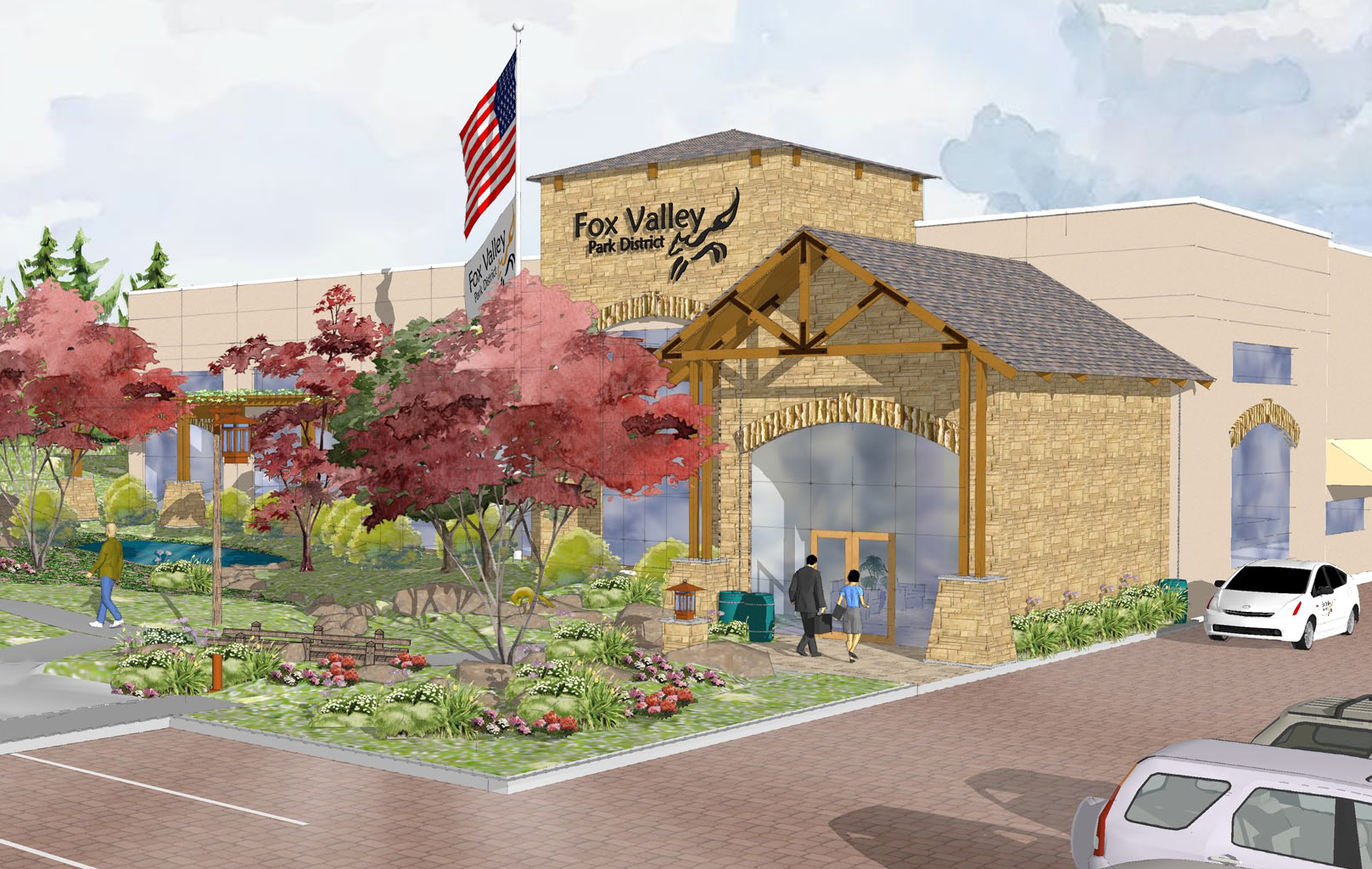 The term “retrofitting” has become common in a world in which older buildings are being remodeled and rehabbed in a way that brings more “green” into them to conserve energy or water.
These building makeovers could occur in residential or commercial areas, but also for older buildings that become recreational or office centers used by park districts and cities.
But even if new construction unfolds on the site of an existing building, it can be done with much of the material from that existing building and incorporate numerous “green” facets into the process.
One such building used by the Fox Valley Park District in Aurora, Ill., has been honored for its environmentally friendly practices.
The Conservation Foundation presented the park district with the 2011 Sustainable Development Award in honor of its new Cole Center building.
The district had consolidated all of its park, maintenance and administration operations into the Cole Center building in the fall, but completed numerous sustainable upgrades and modifications prior to the consolidation.
“This award goes to a business or agency that best demonstrates environmentally friendly practices in its development projects,” said Brook McDonald, president and CEO of The Conservation Foundation. “With all of its sustainable features, the Cole Center is model structure that meets or exceeds the highest environmental standards.”
The Fox Valley Park District reports that the Cole Center has more than 100 environmentally friendly highlights – such as a rainwater harvesting system for vehicle washing, LED lights that use 75 percent less electricity than fluorescents and parking lots built with permeable pavers. By developing the center from an existing building, the park district was able to reduce its carbon footprint by reusing, restoring, recycling and reinvesting.
Other highlights of the building include:
*Contractors were required to divert waste from landfills and maximize recycling of construction and demolition debris.
* Steel stairs, acoustical wall panels and concrete retaining wall blocks were salvaged from the existing building and saved for reuse in new construction.
* Many products specified for use in the Cole Center construction contain high levels of either pre-consumer or post-consumer recycled material content, such as concrete, structural steel, ceramic tile, carpet tile and cast stone.
* Wood-based products were manufactured using sustainably harvested wood materials, not from old-growth timber.
* Office areas have multi-level lighting to allow at least 50 percent light reduction while maintaining uniform lighting levels throughout the building.
* The facility design is based upon the natural and native elements of the nearby Fox River shoreline, featuring stone, wood, water and heavy timber.
* Landscaping that does not require permanent irrigation systems.
* An energy-efficient, direct-fired heating system for a large garage area, and a high-efficiency water heater.
Pepsi intros new ‘natural’ plastic bottle
March 17th, 2011
 With mounting criticism of the plastics industry regarding the billions of plastic bags and bottles in the environment (see Please Conserve post dated March 11) and the massive amount of oil needed to make plastic, news that PepsiCo has created a “natural” plastic bottle was being lauded for its green potential.
Environmental and health reporters at various major media outlets revealed PepsiCo’s creation of a plastic bottle using 100 percent agricultural waste to create a top-quality bottle that could be placed back into the existing recycling system.
Officials in the Natural Resources Defense Council were going as far as to call it “the beginning of the end for petroleum-based plastic bottles.”
The revelation of a plant-based, fully renewable plastic bottle is also good news for those who have contended that the Bisphenol-A, or phthalates, in many plastic products, particularly baby bottles, may be behind the recent increase in autism cases.
Environmentalists are also hoping that the creation of this plastic bottle proves to be a method that could become widespread, eliminating the proliferation of “single-use” or “one-use” plastic items that cannot be recycled, such as the small spoons or forks used at a grocery store food sampling kiosk.
Reports indicate that the PepsiCo bottle is made from switch grass, pine bark and corn husks. Other materials, such as orange peels, potato peels, oat hulls and other agriculture byproducts are earmarked for possible future use. This is a breakthrough for PepsiCo on many levels, since much of the agricultural waste that can be used would be byproducts of its other products such as Frito-Lay, Tropicana and Quaker.
Economic analysts view this as a win for the environment and a win for companies that embrace such methods, pointing out that Coca-Cola introduced a “PlantBottle” nearly two years ago, and a product with 30 percent plant material.
In creating the new bottle, PepsiCo officials proclaimed to have “cracked the code” in inventing a new form of plastic. It is believed that the key to this secret code process would be extracting cellulose from the waste, because cellulose is a basic building block of all plants and can be used to form the resin polyethylene terephthalate, or PET. With this process, Pepsi is saying its new bottle is identical to any other PET plastic bottle on a molecular level.
What the advancement of such a process could eventually mean in terms of saving oil supplies around the globe can only be speculation at this point.
Some conservationists are understandably cautious, insisting that the best course of action in reducing plastic bottles from showing up in landfills or in waterways is for consumers to cut down on their use – no matter how they are made.
Overwhelmed by plastics and what to do
March 11th, 2011
 Can you go a day without seeing a plastic bag or a plastic container? If you live in the United States, the answer has to be a resounding “No.”
The dramatic increase of plastic bags, containers, bottles, bottle caps and eating utensils in the United States and across the world has caused environmentalists to voice concerns about how these products fill our landfills, end up in our oceans, waste our oil supplies and cause health concerns because of the materials used to create them.
Environmental groups in small and large communities are starting to show a film by Susan Bereza titled “Bag It” that examines the proliferation of plastic bags and raises awareness that there are alternatives to consider when shopping. “Bag It” reveals several sobering statistics, amongst them:
* Polyethylene is most widely used in making plastic, with annual production of about 80 million metric tons, and it is made from oil, or fossil fuels.
* Plastic bags first started showing up in stores in 1977 and now are being consumed at a rate of a million a minute, or 500 billion bags per year worldwide.
* Plastic bags are starting to be outlawed in many parts of the world, as well as the United States, where 30 communities in Alaska have banned their use. The city of Washington, D.C., has imposed a fee for using a plastic bag as a way to deter their use.
* The city of San Francisco has banned use of plastic bags, and is reporting that there have been few complaints.
* Corporations and companies that make plastic products still believe that plastic is a better choice because the alternative is paper bags, which pose a threat to trees that produce the paper pulp. The American Chemistry Council strongly believes that plastic is a safe, recyclable alternative and has created a savetheplasticbag.com website.
* Environmentalists feel that paper products can be made from 100 percent recycled paper materials, whereas many plastic products never get recycled and end up in the landfills or in water streams and eventually in the ocean, where they are harmful to marine wildlife.
* Those crusading for less plastic are most concerned about “single-use” plastic products like plastic spoons and forks used for sampling food in stores or in company lunchrooms. Such throwaways take precious fuel to create and are rarely recycled.
* The recycling symbols on plastic items don’t guarantee they will be recycled. Every community in America has different guidelines for what they will and won’t recycle.
* A portion of the northern Pacific Ocean is called the “Great Pacific Garbage Patch” because all of the plastic waste converges there, with tons of small plastic pieces swirling under the water. Aquatic life can’t differentiate between a small piece of plastic and a piece of food, thus autopsies on dead birds and fish on an ocean shore often reveal pieces of plastic that the creatures have consumed.
* Researchers estimate that in some parts of the ocean, there is 40 percent more plastic than food, and it kills an estimated 100,000 marine animals a year.
* Health officials are making efforts to get plastic baby bottles or children’s toys off the shelves if the plastic contains Bisphenol-A (BPA) or phthalates, both considered chemicals that are detrimental to health and a potential cause in the rise of autism cases and other childhood illnesses.
Ultimately, the film challenges people to be more aware of plastics in their daily lives and to try to start eliminating the use of those that are not necessary. Don’t take a plastic bag at a store when you can easily carry out the products or use your own carrying sack. Check the packaging of certain products to see if you can get them without a plastic container. Ask your community recycling leaders what is happening with the plastic bags and plastic packaging you put in your recycling bin.
As it is with any green initiative, ways to use recycled plastic bags, even as part of a process in creating countertops or other furniture pieces, continues to improve. Conservationists across the world are hoping to continue this trend, while also seeing the use of plastic bags fade from society.
Pet owners and conservation
March 7th, 2011
 Picking up your dog’s poop in a plastic bag sounds like the right thing to do, but it is not without environmental consequences. Massive amounts of poop in plastic bags take up considerable space in landfills. But it is even worse to leave it behind, possibly close enough to pollute waterways or spread disease.
While it may not be the most pleasant practice for one’s nostrils, there is a growing trend among pet owners to compost their critters’ waste. For those who own two or more dogs, for example, composting becomes both an economical and environmental benefit.
It is a particularly interesting notion to compost animal waste, when considering that the Environmental Protection Agency recently estimated that the typical dog excretes three quarters of a pound of waste each day. That means one little doggie is creating about 275 pounds of poo per year for our landfills.
Environmentalists believe the total could be cut in half through composting efforts, which would save landfill space, cut down on the energy required to transport and dispose of the waste, while also replenishing lawns in the backyards of those pet owners.
There are some tips, and drawbacks, that nature lovers and pet lovers are quick to agree upon. First, you want to be sure to keep your dog and cat compost separate from any other kitchen waste compost bin. Second, avoid using the pet compost on garden vegetables as the waste contains highly toxic pathogens that the average garden compost cannot break down. This is true, even after dog or cat compost has matured. Third, be sure to keep your homemade dog or cat compost away from ponds, wells or other water sources.
Compost is created to enrich the soil for plant life, and its bin should be made of wire or plastic. Suggestions from pet experts call for taking a plastic garbage bin, drilling about a dozen holes into its side, and cutting out the bottom, so it stands as an upright cylinder. You then dig a hole deep enough to bury the bin, nearly to the top, allowing enough room for the lid to be snapped in place. Two to three inches of rock in the bottom of the bin provides drainage, and then add the pet feces, a septic starter (available in most supermarkets) and water. A “greener” compost is possible by adding sawdust instead of septic starter (basic rule is two parts of waste for every one part of sawdust). After placing the lid on the bin, all that is left is to add poop as it becomes available – which we know is daily.
Others recommend adding grass clippings to the dog waste for the effect of a high-nitrogen “green” material. When an appropriate carbon source is added to that mix, an effective composting material is created. Once the compost has matured for a few months, it is ready to spread and enrich the soil
While more pet owners are considering composting bins in their own backyards, it is also becoming more common to see groups take on composting projects to help the environment in their neighborhoods, at dog parks or doggie daycare centers. The next trend, quite likely, will be enterprising capitalists who would charge a weekly fee to pick up dog poop and compost it.
As an example of a city taking on pet waste composting, Tails magazine reported that municipal officials in Montreal, Canada, have been composting dog waste since 2004. The results? Approximately a ton of dog waste and 7,000 plastic bags are diverted from the landfill each year.
The movement is on for recycling human waste
March 4th, 2011
 There is a movement afoot to make better use of human waste to cut down on the heavy use of water and machinery at wastewater treatment plants. A growing number of experts are examining the potential of using composting toilets to make fertilizer, in addition to transforming sewage sludge into fuel that could heat buildings.
The main benefit is the conservation of water used in the wastewater treatment plants, and in the flushing of toilets, which occurs about five times a day in a typical American household. Reports from five years ago through the U.S. Geological Survey indicated that Americans use about 410 billion gallons of water a day, 30 percent of those gallons coming from flushed toilets.
Water reclamation districts throughout the country, particularly in big cities, are spending millions of dollars treating wastewater, lending credence to the theory that better use of human waste could translate to significant money savings as well.
At its basic level, the recycling of human waste creates soil compost that can be used by gardeners.
Researchers and “green” authors are calling for a close look at recycling human waste, saying it has long been ignored as a potential resource. Residents who buy into the concept across the country have begun using composting toilets, which work much the same way as a flushing toilet, except the waste is collected in a composter. A fan draws the waste down into the composter and the odor is released through an outdoor vent.Organic mulch or wood shavings are sometimes added to break the waste down. After breakdown is complete, the compost is released through a lid, put into sacks and eventually used as fertilizer.
Green enthusiasts view this as the ultimate connection between man and the land. There is nothing illegal about using human waste as a compost product, but there are regulations in place about composting that must be followed.
Conservationists hope another step will take hold as a connection between technology and the waste that humans produce, if major cities begin to embrace the use of sewage sludge as a way to produce methane gas and convert it into a less expensive power source. An experiment already underway in San Antonio, Texas, and California is researching a fuel-cell conversion device that would convert human waste into hydrogen fuel.
Those pushing the use of human waste as a resource have a simple math equation working in their favor. Think of the population of this country and the amount of human waste produced. And then ask how much water it takes to treat all that?
Good for environment and corporation’s public image
February 26th, 2011
 If major corporations and universities all converted their campuses with sustainable earth care in mind, there would be far less damage to our rivers and forests.
And it would cost less money, conserve energy and water, and cut down on pollution caused by lawn mowers.
If every resident had a rain garden and a rain barrel in an attempt to keep any rainfall of one inch or less on their own property, it could eliminate up to 80 percent of today’s flooding problems.
Those are the facts as Bill Bedrossian of Bedrock Earthscapes in Wheaton, IL, sees them. Bedrossian, with more than 35 years of experience in landscape design, grounds and facility management, recently shared his ideas during a “Renewability and Sustainability” seminar at the Illinois Institute of Technology in Wheaton.
“We need systems to capture rainfall, clean it and reuse it,” Bedrossian said. “We do that through green roofs, rain barrels, rain gardens, vegetated swales, native plantings and porous pavement.”
Bedrossian said the current system of rain gutters, rainspouts and man-made retention ponds and wetlands actually hurts the environment.
“All we do is move our floodwater with salt and oil and other run-off and move it off our property and into our streams and rivers, where it flows into our forest preserves and kills native plants, allowing only invasives to grow and thrive.”
When major corporations utilize native plantings and landscape plans that handle water run-off and reuse it, they are showing good corporate social responsibility and saving money.
“We spend more money on water and fertilizer on our lawns in this country than we do on agriculture,” Bedrossian said. “Sustainability is defined as using only what we need so there is something left for future generations.
“Sustainable practices are the wave of the future because they enhance biodiversity and support the LEED and emerging stormwater best management practices.”
Bedrossian said a vegetable garden on your property is a great way to process rainwater and help the soil.
“Young people today don’t know how to plant a vegetable garden, because they’ve never been exposed to it,” Bedrossian said. “They are teaching it now in college, if you can imagine that.”
Bedrossian said that huge parking lots at businesses or college campuses are perfect places to start employing bio-swales – the green areas with plants or trees that break up a large parking lot.
“We are also starting to see more no-mow types of turf, especially in areas near parking lots or on sloping hills,” he added. “It doesn’t make sense to mow long grass near a parking lot, and then all of that grass sits on the parking lot, until it flows off into the sewers.”
For homeowners, Bedrossian suggests that those who have low-lying areas that collect water and are hard to mow through, should consider a rain garden in those areas.
“If everyone had a rain garden in their front yards, we’d eliminate a lot of our flooding problems, while also conserving on the use of our own water,” Bedrossian said.
The science of conserving energy with low-tech applications
February 23rd, 2011
 Steve Stevens figures that if Thomas Edison could see the need for energy conservation in the future, it would be wise for all of us to become practitioners today.
Stevens, a resident of Golden, Colo., has made sustainability studies his life’s pursuit after retiring from a long career at AT&T Bell Laboratories in 2000. His home in Colorado also serves as a bicycling history museum (his other passion), but one that is considered a “net power plant,” meaning it generates more energy than it uses.
In briefing a group recently at the Illinois Institute of Technology in Wheaton, Ill., Stevens reminded attendees of what Edison saw in the future.
In 1931, Edison said, “I’d put my money on the sun and solar energy, and I hope we don’t have to wait until oil and coal run out before we tackle that.”
Stevens also points to George W. Bush, who as president was considered an ally of big oil companies and “a great oil salesman.”
“But it was George Bush who said ‘we are addicted to oil,’” Stevens noted. “And after two wars over Mideast oil, he has changed his tune and now has a ‘green’ ranch in Texas and is a huge proponent of conservation.”
Stevens said that “retrofitting” homes to be more energy efficient is an up-and-coming industry that is going to create jobs.
“The key components are sun, sealing and super insulation,” Stevens said, pointing to examples of homes in Taos, N.M., that are so energy efficient that they are called “earth ships” or “energy-free homes.”
“The easiest way to look at this is by considering your house as a bucket with leaks in it, and you have to plug those leaks,” Stevens explained. “Energy slips out of every seam in your house.”
Stevens goes further than most in his pursuit of energy conservation. He kept Excel spreadsheets of his bill payments, monitoring his electricity and natural gas payments, and coming to conclusions on where he needed to concentrate his efforts.
“I took out the incandescent lights and replaced them with CFLs, but then I noticed my gas bill went up, because I didn’t have the incandescent lights generating heat,” Stevens said. “I went to LED lights and an energy-saving furnace, in addition to plugging leaks, and then my bills went down.”
Stevens has charted the “source energy factor,” or what it costs to deliver electricity to a home, and concluded that a single-family home in the Midwest uses 65,000 BTUs per square foot for an entire year of energy use. By comparison, a new EPA home, or LEED Gold home, would use 40,000 BTUs, while a “net zero home” would generate as many BTUs as it consumes.
“How do you make heat and how do you contain it?” Stevens asks. “By making your heating its most efficient, you are saving money right away. A condensing furnace, and then sealing up the house so no outside air comes in during cold weather, is the key.”
Stevens recommends using a product called Mastic on the gaps on heat duct joints, while also making use of solar panels to capture solar heat. While wood burning stoves are effective, Stevens recommends getting rid of fireplaces, which don’t heat the house and are generally the biggest draw of warm air out of the house.
“Simple stuff, the low-technology applications, can have the highest returns,” Stevens said in encouraging that every crack in the house should be calked or foamed, starting with doors and windows.
An energy audit of the home is also helpful, along with a temperature gauge that indicates the temperature level at each wall or area in a home.
“The doors to a garage are usually a big culprit for bringing in cold air,” Stevens said. “And you should seal electrical outlets on the inside of the outlet box. The rim joists in the basement need to be caulked along the edges to stop air leaks.”
Stevens is also a big proponent of blowing insulation into attics, and also using fiberglass to fill up wall cavities in a basement.
“It’s also important to insulate any overhangs in your homes,” Stevens said. “Most of the time, with those overhangs, you have an inch of plywood and two inches of air between the air duct inside your home and the outside cold air. When it gets to be below zero outside, how much cold air do you think can make it through an inch of plywood and two inches of air?”
New generation of refrigerators cuts down on emissions
February 19th, 2011
 One of the most common kitchen appliances is becoming more affordable for those who are green conscious, especially in the area of energy savings, and will soon be available in the United States with models that cut down on chlorofluorocarbon (CFC) or hydrofluorocarbon (HFC) refrigerant emissions.
Known more commonly as Freon, the CFC emissions were common in refrigerators that Americans purchased prior to 1966 and considered a threat to the ozone layer. More recently, refrigerators have used the HFC refrigerant that has been tied to global warming. Since the 1990s, environmentalists have been pushing to stop emissions of CFCs or HFCs into the atmosphere by encouraging the use of a hydrocarbon refrigerant, which is a more natural combination of hydrogens and carbons that do not degrade the ozone and are easily broken down by the sun.
Refrigerator manufacturers have responded in recent years by making it more affordable to purchase a “green” refrigerator, one using high-efficiency motors and vacuum insulated panels that consume less power. Within the next year, the use of hydrocarbons will become more commonplace as well. Germany is credited by environmentalists with starting this trend toward hydrocarbon refrigerants in 1993, which was about the same time that the U.S. began embracing HFCs as a replacement for CFCs.
Although refrigerators account for far less global consumption of HFCs than air-conditioners in automobiles, it is believed that an HFC refrigerator’s impact on the climate is nearly 4,000 times more potent over a 20-year period than the far more common greenhouse gas of carbon dioxide.
Since the first Greenfreeze refrigerator was sold in Germany early in 1993, it is estimated that more than 400 million hydrocarbon household units have been sold by major manufacturers such as Whirlpool, Haier and Sanyo.
While Americans wait for that option, they can still obtain energy-efficient models and do their own maintenance to keep the appliance from draining unnecessary power. Vacuuming the refrigerator coils at least once a year helps maintain energy-efficient operation. The seal around the refrigerator door can be checked by closing the door on a dollar bill. Replace the gasket if the bill falls out or can be easily removed without opening the door. Keep door gaskets clean of mold and mildew with mild detergent and water, not bleach, say the experts.
Sodexo ‘scores a basket’ for environment
February 15th, 2011
 When an international food service makes a change in its process that is “green friendly,” it can equate to saving money as well as the environment. This is of particular importance for school districts, and the Geneva School District in Illinois is about to benefit from a new policy by Sodexo, Inc., a leading provider of integrated food services and facilities management.
The district recently announced that Sodexo will begin using reusable plastic baskets instead of the disposable Styrofoam trays that were used to serve lunch in all of the district’s six elementary schools.
Sodexo estimates that it feeds more than 1,000 elementary students and goes through approximately 195,000 Styrofoam trays in a school year. In addition to keeping all of those trays from ending up in landfills, the school district stands to save about $8,000 a year in food service costs.
A press release from the school district cited the benefits from a Sodexo official at the district.
“Using the plastic basket will reduce the amount of waste we produce, reduce garbage collection, and save time in the lunch room at clean-up,” said Sodexo General Manager Becky Selcke. “This is a positive direction for us to be moving in and a positive step for the environment.”
A plastic food basket is common at fast-food and family restaurants, or bars and pubs that offer food, and the baskets used in the elementary schools will have some of the same features.
The baskets will be lined with wax paper and will be washed and sanitized daily. Students’ hot lunch items will be placed on the wax paper, and sides like salads can either be put in the basket or into a paper “boat,” which is poly coated to prevent food from leaking out. The school district reported that its middle schools already use plastic baskets for lunch service, and its high school has also replaced the use of Styrofoam plates with paper “boats” to serve pizza, deli sandwiches, and other meal choices.
Sodexo policies can have significant impact on environmental initiatives as it carries out green-friendly measures with many of its clients. The company employs 355,000 people worldwide and is present on 30,600 sites (private corporations, hotels, hospitals, schools, military bases, correctional facilities, etc.) in 80 countries. In North America, the company employs 120,000 people.
 Follow Us on Facebook
 Follow Please Conserve on Twitter
 Subscribe to our RSS Feed
advertisement
advertisement
