

Always Green
 January 31st, 2011
 A “Winter Wonderland” in Chicago? I think ‘tis a season more comparable to a winter inferno-land, minus the heat. There is absolutely nothing wonderful about blasting icy winds and sub-zero temperatures. In order to escape this scene of death, this winter I decided to lead a volunteer trip abroad to Costa Rica. Although the prospect of 80-degree sunny weather was definitely part of the allure, what truly captured my interest was the chance to work on an organic farm and really act on the green principles we try to encourage here at Please Conserve. Actions speak louder than words, right?
After two plane rides, 7 hours of layovers, and a 3-hour, slightly nauseating bus ride, I arrived with my group to the miniscule, yet vibrant town of Mastatal. Miniscule being a very accurate descriptor since this petit community cannot even be found on Google Maps. Yes, that is possible. So, here we arrived far from the wrath of the technology that engulfed our every day lives to a place of serenity and silence that we were not used to but by the end, couldn’t bear to leave. And although I could chronicle the group experience, including everything from working on the farm to visits to the local bar (a frequent source of entertainment), I wanted to focus on the story of the organization where we volunteered, Cabañas Siempre Verde- from the uncertain beginnings to the passion that drives the will to continue.
The idea behind Cabañas Siempre Verde wasn’t your typical “this was my childhood dream” kind of story. As founder Marcos Garcia said, it just sort of…happened. Garcia had grown up on his family’s farm, the site of the organization today, so farming, and in particular organic farming, was always a daily part of life for him. In high school Garcia took three years of permaculture, an approach that teaches methods of sustainable land use. The next step was to go to a university, but this ambition was suspended due to lack of funds. Not wanting to remain idle, Garcia took courses in carpentry and English, which proved to be quite beneficial in his future endeavors. A couple years later, Garcia built the first cabaña, which is Spanish for a cabin. His particular structure was a roofed, open-wall dwelling, elevated about 10 feet off the ground. “The first cabaña was a test of my building skills,” said Garcia. “ I wanted to see how well I could do.”
Turning out quite well, Garcia decided to build a second cabaña and in 2005 took a stab at running a volunteer organization. “ I just put all my skills, carpentry, organic farming, and English, together,” said Garcia. And what a risk worth taking. The farm succeeds in attracting volunteers from all across the globe, all backgrounds, all ages. In fact, during my stay we were accompanied by a young couple from Belgium as well as a retired woman from Canada. “People continue coming and they come back,” said Garcia. “That inspires me to continue.”
During their stay, volunteers get the opportunity to work on a variety of projects, generally suited to their interests and abilities, and depending on what needs to be done at that particular time of the year. Because our group was quite big, we were split up into smaller teams who worked on everything from gardening, to digging, to building a compost toilet. And believe me, no experience was necessary. Volunteering to work on building a bench from scratch, I was reminded that my only carpentry skills were those I acquired in childhood…building with Legos. But with Garcia’s patience and natural ability to teach, I was able to build a fully functional bench and no one was injured in the process. Garcia says that he hopes that such experiences will allow volunteers to immerse themselves into the sustainable lifestyle and teach them practices that can be applied back home.
Although the work is challenging and the Costa Rican sun does not spare any mercy on Caucasian skin, engaging in such  sustainable projects is immensely rewarding and proves that a green lifestyle is attainable. “You can be sustainable in every aspect of your life, especially food and work,” said Garcia. Garcia’s volunteer farm proves this point and this is something he truly takes pride for. What started as an unsure venture has turned into a green haven. How fitting then, that the other part of the name, “Siempre Verde” in Spanish means, “always green”.
For more information, visit:
http://www.cabanassiempreverde.com/
The cabana, home to the volunteers. Photo by Sean Hill.
Just an everyday Mackaw sighting. No big deal. Photo by Sean Hill.
 Author:
  Posted in
Future viability of solar depends on cheaper cells
January 25th, 2011
 During 2010, new solar photovoltaic (PV) demand worldwide approached 10,000 MW and is expected to grow by double-digit percentages annually for the foreseeable future if production costs can be driven to market-competitive levels.
In response to interest in photovoltaics for industrial and utility scale power, SRI Consulting, Menlo Park, Calif., now part of IHS Inc., examines the economics for producing solar cells from three dominant commercial process technologies—monocrystalline wafers (Sunpower), CdTe thin-film (First Solar) and concentrating PV (Concentrix)—in its new techno-economic analysis report entitled “Solar Photovoltaic Technology.”
In the U.S. and other regions, utility commission renewable power portfolio requirements dictate that specific amounts of grid power be sourced using technologies that do not produce greenhouse gases. As a result, several utilities are now considering supplementing conventional power (nuclear, coal and natural gas) with a combination of wind power, biomass power, solar thermal and solar photovoltaic power.
Demand growth for PV power in the early 2000s averaged 40 percent per year, driven by a combination of technology advancements and generous government subsidies, especially in Spain and Germany, in the form of feed-in-tariffs. The global economic recession of 2008-09 all but eliminated growth, but early 2010 saw demand begin to turn around.
Photovoltaic power is well suited to distributed demand applications where its devices can be mounted on residential homeowner rooftops (< 5 kw capacity), and on small commercial buildings (< 50 kw). Advancements in both manufacturing technology and engineering and design practices are also reducing the cost of “balance of system” components required for the consideration of PV power at utility scale (> 5 MW) at economics approaching conventional peaking power cost (grid parity).
“Advances in technology have significantly improved cost competitiveness, but the commercial world still relies heavily on government subsidies,” said the report’s author and IHS Principal Consultant Anthony Pavone. “Like other renewable energy technologies, societal concerns over greenhouse gas-caused climate change provide the justification for these subsidies.”
Although the integrated product chain can be considered as starting with mined silicon metal and terminating with a combination of PV modules sold to end-use customers, and turnkey power plants sold to utility customers, the heart of the business is in producing PV cells, mounting them in modules (sometimes called panels) rated at 70 to 400 watts, and installing arrays of modules to satisfy customer requirements. A globally competitive producer requires a capacity base of 500 MW/year, and that a utility scale PV plant will have a capacity of 10 to 50 MW.
Two forms of cell architecture, silicon-based wafer and thin-film technologies, dominate the business, with 80 percent and 20 percent market share, respectively. SRI’s study estimates the production economics for a PV utility power plant with a 50 MW capacity using the two manufacturing approaches. These economics, although not cost competitive with most conventional baseload power generation (4 to 8 cents per kwh), are close enough to compete with peaking electric power in most business environments, and with base load electric power in high-cost power regions, including Denmark, Italy and California.
“As PV technology improvements reduce cost faster than conventional technologies reduce cost, the world is likely to soon see an environment where PV subsidies are no longer necessary,” said Pavone.
For additional information, visit www.sriconsulting.com/PEP.
Conservation takes hold on the slopes
January 21st, 2011
 For far too long, skiers worldwide have generally accepted the fact that construction of a ski resort can have a significant impact on the environment.
Consider what happens when a ski resort is built: Trees are cleared to make way for the ski slopes, thus disrupting wildlife habits and vegetation and altering natural watersheds. Cars driving to the resort area create pollution, as does equipment used to make snow, maintain the slopes or mow grass during summer months, not to mention heating buildings during cold winters. In some cases, factories that make clothing and equipment for skiing could be located nearby, and they create even more pollution.
It comes as no surprise then that ski resorts are quickly becoming examples of how an industry can build green initiatives into its operations and make a significant difference in reducing its carbon footprint.
So much so, that a group called the Ski Area Citizens’ Coalition has been formed to rate and survey ski resorts based on criteria from local conservation groups and the U.S. Forest Service.
The emphasis for ski resorts has been to have general conservation and environment-friendly policies and procedures in place, specifically for habitat protection, watershed protection and addressing climate change.
The coalition looks at all aspects of a ski resort operation, from recycling to future plans – and sometimes those future plans don’t sit well. It is generally believed that smaller ski resorts grade better than those that are constantly expanding, because that expansion is sure to affect the environment.
Some ski resorts have been on board with energy savings for many years. Aspen Ski Country in Colorado has one of the largest solar-power systems in the industry, which has been in place since 1997. It also fuels its trail-grooming machines with biodiesel fuel.
Park City Mountain Resort in Utah has reported that it uses renewable energy to power chair lifts and has purchased more efficient snow-making equipment, while also cutting back on its snowmobile fleet.
In a gesture that proves no conservation policy is too small to make a difference, the resort also has been using recycled paper for its trail maps and began using regular dishes rather than disposable ones in all of its lodges.
Other examples for resorts come in the form of using biofuel from recycled cooking oil to power shuttles, and using non-petroleum-based cleaners for all housekeeping.
As more ski resorts take hold of these conservation methods, skiers across the world will be able to say they participate in a sport trying to make an environmental difference.
Three-quarters of U.S. lighting to be energy-efficient by 2020
January 17th, 2011
 The United States accounts for approximately 20 percent of the world’s total electricity consumption for lighting at an annual cost of over $40 billion. The largest share of this lighting electricity is used in commercial and public buildings, followed by residential lighting, industrial sector lighting and outdoor/street lighting. According to a recent report from Pike Research, Boulder, Colo., fluorescent and light emitting diode (LED) lighting technologies will play an increasingly important role in the U.S. market, making up over three quarters of that market by 2020.
“Fluorescent lighting technology is becoming more and more important in many key applications,” says Pike Research senior analyst Mike Wapner. “Fluorescent lighting is already very energy efficient, it has increasingly cost-effective dimming options, and it’s been around long enough for people to have familiarity and confidence with its performance in a variety of lighting situations.”
Wapner adds that while technical, market and other barriers will somewhat hamper the growth of LED lighting in the beginning of this decade, adoption will start to accelerate by the 2014-15 timeframe. Penetration of the outdoor stationary sector will grow first, partly because color rendering is less important in these applications (thus allowing use of the least expensive LEDs). When compared to the overall lighting industry, LED sales volumes will still be relatively low in those years, but high prices will lead to large revenue figures. The long life of LED products will also mean that most sales will go into new construction and retrofit situations, and there will be relatively little replacement business.
Even though technological, policy and market trends appear to be driving the U.S. lighting market away from incandescent lighting, they will not totally disappear any time soon. Many types of “specialty” incandescent lamps are exempted from U.S. regulations that will phase out the most common bulbs. Incandescent lamps are also inexpensive to manufacture and there is still nothing restricting their use in much of the world, Wapner says.
An executive summary Pike Research’s report,
“Energy Efficient Lighting for Commercial Markets,” is available for free on the company’s website, www.pikeresearch.com.
College campuses becoming ‘green’ models
January 8th, 2011
 If the conservation and “green” movement is going to take hold as a routine aspect of American life, it stands to reason that our nation’s universities and college campuses are going to be the breeding ground for such knowledge.
The research and innovation taking place in labs and classrooms at institutions of higher learning is a key – but many universities are also becoming visible examples of what can be done by establishing their own green policies and campus sustainability projects.
This can be seen in obvious ways, whether by the construction of a green roof on a campus building, or the placement of recycled materials to create walkway tiles, or the strategic planting of trees and shrubs for landscaping that reduces water runoff. These types of small projects become visible examples as a classroom “lab” that stress the importance of environmental issues for students.
But a Campus Sustainability Project (CSP) takes everything a step further and is created to develop an online database of environmental management data, policies, and programs for an entire campus. It is a way to conduct research on sustainability in higher education and provide educators and students with resources to help achieve campus sustainability.
One such example is taking place at Southern Illinois University in Carbondale, where the university has completed many retrofitting projects throughout its buildings. One campus building provides a perfect example, as it was constructed in the late 1960’s as a guesthouse for prestigious visitors. It currently houses campus offices. Building construction techniques from 50 years ago, coupled with a different use from the building’s original intent, ultimately results in a building design that wastes energy. A project to decrease electric costs at this building cut power usage in half.
A major energy consumer in buildings is the heating, ventilating and air conditioning systems, which result in older appliances needing to be retrofitted.
Through projects such as these, it has been learned that a key component to cope with inefficient equipment is to incorporate a geothermal heat pump in the building. The heat pump will deliver heated or cooled water year round for a fraction of the actual cost of heating and cooling. Zone dampers can also be implemented in a building to effectively divide it into different climate zones while reducing heating and cooling overlapping.
Lighting of a building can also be assessed, usually revealing that some light fixtures are still incandescent. Those incandescent light bulbs can be replaced with compact fluorescent lamps. This replacement not only is easy and inexpensive, but also pays for itself fairly quickly.
In older buildings on our nation’s campuses, it will also become common to retrofit archaic appliances, improve attic insulation and seal any leaks in ducts.
The end result will be our nation’s campuses being the prime example of conservation, while emphasizing to young minds what “going green” really means.
Expect dry cleaners to start considering alternatives
December 31st, 2010
 Taking those white shirts or suits, or delicate dresses, to the dry cleaners has been a standard routine of daily life for decades. How would we get that wine spill off of our sport coat without the neighborhood dry cleaners business?
But dry cleaners are also entering the era of heightened awareness of everything “green” and, as such, are getting closer scrutiny regarding claims of “green” or “organic” dry cleaning.
There is no regulation of the dry cleaning business in regards to what qualifies them as more “green” than others, or if the term “organic” is rightfully justified.
Still, alternatives to the use of perc (perchlorol-ethylene) as a major cleaning agent are being considered. Good Housekeeping magazine recently reported that about 85 percent of dry cleaners use perc, which, while safe for the customer wearing the clothes, is strictly regulated because if it is not handled properly it can become a toxic pollutant and dangerous to those who work at a dry cleaners business.
A federal law has called for the phasing out of perc being used at dry cleaners located in residential buildings by the year 2020. With this sort of reasoning becoming more widespread, it is likely we’ll see cleaning businesses moving toward safer alternatives.
Of those, a liquid CO2 cleaning process already deemed safe by the EPA, may come into more use. Because it reuses most of its CO2, it is not considered as a dangerous greenhouse gas contributor.
A new cleanser called Green Earth, which is a liquid silicone, makes claims to degrade to sand, CO2 and water, but the EPA has to give this product further study.
Wet cleaning is always a possible alternative, but it does have those age-old problems of discoloring or shrinking some fabrics. It is likely that those in the cleaning business will come up with ways for wet cleaning to avoid some of those pitfalls.
It also is likely that dry cleaners will begin to use hydrocarbon solvents because they can easily be used in current perc machines. Because they are petroleum-based, hydrocarbon solvents must also be handled with extreme care, but the EPA views them as products that are engineered to biodegrade much faster than perc.
Consumers will certainly continue to measure the progress of dry cleaners “going green” simply on the basis of how well the alternative processes clean their clothes.
In reviews by magazines and consumer watchdogs, Green Earth has been getting praise as a good cleaner for the usual culprits – coffee, lipstick and oil stains. CO2 cleaning is generally considered the least likely to shrink your clothes, while the wet cleaners continue to struggle with that ornery lipstick, oil and ink.
Perc is generally considered the best for oil and lipstick stains, but not always reliable on ink and wine, while the perc alternative hydrocarbon has been considered the best for stains on wool products. But with cotton clothing, the hydrocarbon cleaner doesn’t fare as well.
Developers, recyclers find ‘path’ to keep shingles from landfills
December 22nd, 2010
 Recyclers and developers across the country are teaming up in an effort to recycle an item that has been piling up in our landfills for decades. Tons of asphalt shingles, a petroleum-based product, have been going into landfills during new home construction or after demolition or re-roofing of older homes and businesses.
A movement to keep roof shingles out of the waste stream has been catching on, and its effectiveness can be illustrated by a Grand Rapids, Mich., company, Crutchall Resource Recycling, which ground up 30,000 tons of shingles in only three months last summer.
In areas of the country in which building homes was robust before the economic downturn, it is estimated that 70,000 to 100,000 tons of shingles could end up in a single county’s landfills in just one year.
The Northeast Recycling Council estimates that approximately two-thirds of the roofing shingles in the United States are made of asphalt. With discarded asphalt shingles taking up landfill space and polluting the environment by releasing carcinogenic hydrocarbons into the ground, the recycling companies turned to a logical use for ground up shingles – repairing or paving roads as part of the asphalt hot mix.
Developers with a reputation for smooth roads in their subdivisions are starting to use recycled shingles to create “green” streets. A subdivision called Tall Oaks in Elgin, Ill., recently had eight miles of roads constructed with recycled shingles through developer Wyndham Deerpoint Homes.
In addition to using recycled shingles, the “green” roads also are designed to last longer while reducing the amount of asphalt, sand and oil normally needed for paving.
Consumers can help with this cause by making sure their roofing company has a recycling program, or letting it be known that they would like to donate used shingles to environmentally-conscious builders who are able to roof certain homes with used shingles.
Heritage Environmental Services has shingle recycling drop-off locations in seven cities, pushing the practice as a much less expensive alternative than paying the fees to dump them in landfills.
Because shingles are made up of concrete and bitumen — the black, oily material, or tar, that is a naturally-occurring byproduct of decomposed organic materials — environmentalists aren’t able to pinpoint exactly how long it would take for a shingle to decompose in a landfill.
The most common answer, it appears, is “forever.”
Far fewer holiday light strings ending up in landfills
December 17th, 2010
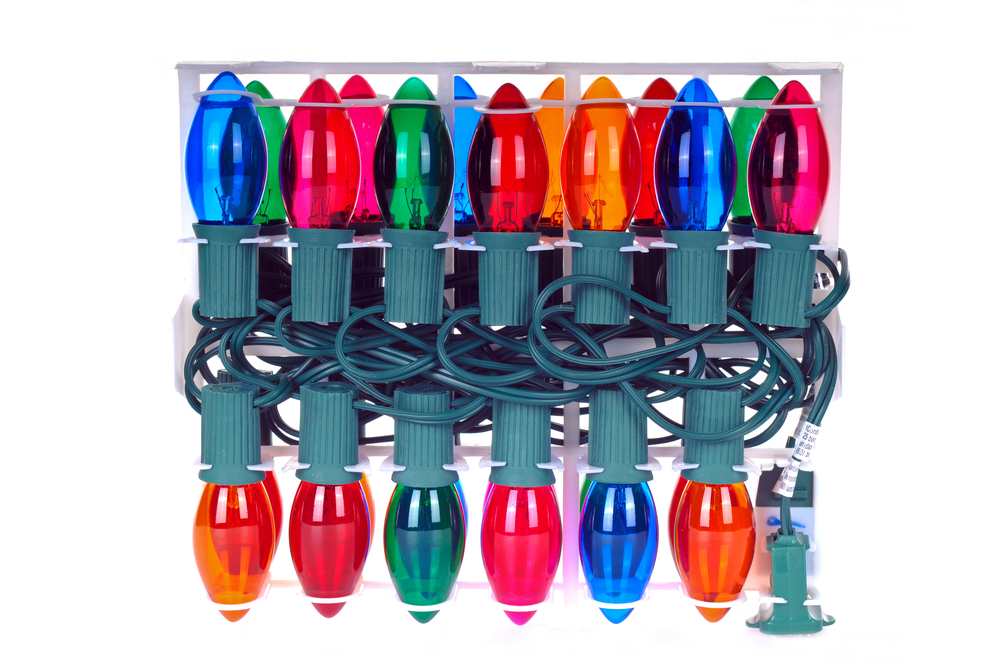 Who hasn’t endured the frustration that Clark Griswold experienced when his holiday lights display in “National Lampoon’s Christmas Vacation” wouldn’t turn on?
It may not be that dramatic for most of us, and more likely, it’s only the occasional string of Christmas lights that don’t work either before, during or after the holiday display season.
And what has happened to that string of Christmas lights for the past several decades? Into the garbage and eventually into our landfills.
In the past two years, the movement to provide recycling for used Christmas lights has picked up a lot of momentum. It appears it will become even more common in years to come, especially as consumers discard old incandescent lights for energy-saving LED strings.
Tons of worn-out lights have cluttered landfills, and environmentalists point out that the plastic wiring common with holiday lights could take thousands of years to decompose. Animal lovers say a string of lights in a landfill can choke or entangle a small animal as easily as the plastic rings used on six-packs of soda.
As we now enter the age of recycling the lights that at one time made the holidays bright in large or small displays at our homes, businesses or on our community streets and parks, there is finally an alternative to just tossing them out.
Consider that a company such as Elgin Recycling Inc., servicing about 24 communities in northern Illinois with a Christmas lights recycling program, collected 9,949 pounds of used lights in its first year with only 12 communities involved, it is not hard to imagine what a nationwide effort could accomplish.
Many recycling firms or scrap collecting companies across the country are making recycling bins available at various community locations for used Christmas lights. Home Depot stores collect lights for a couple of weeks during the holiday seasons, and various community organizations or colleges are getting involved in providing the service.
What happens to your old lights once you drop them in a recycling container for pickup?
Generally, the lights will be processed and any material that cannot be recycled (i.e. loose bulbs) is discarded. When hundreds of light sets have been collected, a recycling company will take them to a recycling facility for shredding. Afterward, the pieces are processed and sorted into the various components that make up the lights (pvc, glass, copper).
In the recycling market, the chances of finding a buyer and future uses for the recycle materials are enhanced when something is being recycled in volume.
The sheer volume of holiday lights throughout the world provides hope that our landfills will be far less cluttered and a use for the plastics and glass will be more practical because of the quantities available.
Artificial turf debate picks up green steam
December 9th, 2010
 The benefit of utilizing artificial turf as a standard feature on high school football fields across the nation is a debate gaining momentum – mostly because it cuts down on the cost of replacing or patching natural turf, watering it and lining it with chalk and/or paint. But the artificial turf question is relevant for businesses, airports, and as a general part of any landscaper’s plans.
The dramatic money savings in water and other maintenance, as well as artificial turf’s environmental benefits, can offset the thought of a little less natural green in our world. Granted, athletic departments at high schools operate with budgets that make it entirely impractical to consider the actual watering of a dry football or soccer field on a regular basis — but it’s that lack of water that can deteriorate a field. Or, it can be too much water during a rainy football season that renders a field a muddy swamp – eventually torn up and in need of major replanting and watering.
Some 40 years ago, when artificial turf made its debut at the Houston Astrodome, the surface was criticized because it could become as hard as concrete in an outdoor setting during the cold winter months, and it didn’t look like natural grass.
Today, the turfs being used are much softer and last up to 15 or 20 years. School districts and sports boosters are quick to point out how much water, turf and other maintenance costs can be saved over that period of time – with some estimates being close to $2 million over that 20-year time frame.
Landscapers are starting to realize the benefits of artificial turf in some settings, pointing out that when strategically placed it can aid in controlling surrounding soil erosion.
In airport settings, artificial turf is now being considered as a way to minimize erosion from aircraft maneuvering, which cuts down on asphalt and concrete and any run-off into nearby soils.
Conservationists who see the benefits of artificial turf in certain circumstances generally point to three major environmental aspects – no need for watering, thus protecting natural resources; no need for pesticides, fertilizers, herbicides and fungicides; and most importantly a dramatic reduction in carbon emissions from mowing, weed-whacking and edging.
Artificial turf has had its place in modern life, but its benefits in saving money for school districts and businesses, while also conserving resources and reducing air pollution, is increasing the desire for a closer look.
Diesel fuel industry cuts sulfur content by 97%
December 7th, 2010
 The diesel fuel industry successfully met the Dec. 1, 2010, deadline mandated by the EPA, reducing the sulfur content of diesel fuel by 97 percent, to 15 parts per million. This ultra-low sulfur diesel (ULSD) fuel represents a major step forward in improving air quality in the United States.
“It is quite a remarkable feat that refiners have been able to reduce the sulfur content in diesel fuel by 97 percent,” said Allen Schaeffer, executive director of the Diesel Technology Forum. “The United States now officially has the cleanest on-road diesel fuel in the world.”
The new clean diesel fuel will be a major contributor in helping cities and states meet strict new air quality goals set by the federal government, he said. “This new ultra-clean fuel is extremely important because sulfur tends to hamper exhaust-control devices in diesel engines, like lead once impeded the catalytic converters on gasoline cars. Just as taking the lead out of gasoline in the 1970s enabled a new generation of emissions control technologies that have made gasoline vehicles over 95 percent cleaner, removing the sulfur from diesel helps usher in a new generation of clean diesel technology,” Schaeffer said.
The diesel industry also will continue to transition off-road vehicles like farm tractors and construction machines to ultra-low sulfur diesel fuel. Construction and agricultural equipment manufacturers are well on their way to launching a new generation of low-emission clean diesel engines that will require this cleaner fuel, Schaeffer added.
The Diesel Technology Forum is a non-profit national organization dedicated to raising awareness about the importance of diesel engines, fuel and technology. For more information, visit www.dieselforum.org.
 Follow Us on Facebook
 Follow Please Conserve on Twitter
 Subscribe to our RSS Feed
advertisement
advertisement
