

Timken recycles scrap metal and water
 May 21st, 2011
 In 2010, The Timken Co., Canton, Ohio, transformed 1.6 million tons of scrap metal—the equivalent of 1.3 million junk cars—into some of the cleanest, strongest steel on earth. This Timken steel was made from nearly 100 percent recycled content, which included 350,000 tons of recycled scrap metal from Timken operations.
“Timken makes a positive impact on the world not only because of the types of products we make, but how we make them,” said Alan Oberster, vice president of environmental, health and safety. “Our steelmaking process is a great example of this. We create value by making products the world needs, and by making our steel out of scrap, we conserve natural resources while putting mountains of waste to good use.”
Oberster added that being green is not new to the company, founded by Henry Timken in 1899, a pioneer in the development of roller bearings that have enabled the energy-efficient operation of vehicles and machinery from horse-drawn wagons to the Space Shuttle.
Timken also demonstrates industry leadership in efforts to reduce energy and waste in its operations:
• In 2010, Timken diverted 20,350 tons of electric-arc furnace dust from landfills, capturing and recycling the dust byproduct of the company’s steelmaking process. Timken’s steel manufacturing relies on energy-efficient electric technology that is a green alternative to blast-furnace or basic-oxygen-furnace methods.
• The company continuously invests in technologies that reduce the amount of electricity needed to produce its steel. Timken has cut the amount of energy needed to produce steel ingots by 27 percent since 1990. Based on 2010 production alone, the electricity saved is enough to power 11 million homes for a day.
• At its Canton steel facilities, Timken recycles 30 million gallons of water waste each day through a closed-loop recycling process, enough to fill 45 Olympic-sized swimming pools.
In recognition of Earth Day, the company has posted videos on the Timken YouTube channel featuring recycling in its steelmaking process and green jobs in the company. A wind turbine animation shows how Timken’s technologies work inside these massive systems to harness the wind’s natural energy. Additional information about the company’s green and corporate citizenship initiatives is available at Timken’s website, www.timken.com.
 Author:
  Posted in
As rain barrel use grows so do questions and answers
May 18th, 2011
 Call it Yankee ingenuity if you will, but Americans are becoming more curious – and acceptable – of the idea of using rain barrels on their property because they have figured out ways to make them look good and operate properly.
This newest wave of acceptance for rain barrels is fueled mostly by the growing green movement – because the rain barrel captures rainfall and directs it back toward trees and plants, instead of down driveways and streets into the sewer system. It is also fueled by a better understanding and growing knowledge of what the barrels do and don’t do, in addition to addressing some common worries about placing these rain collectors near a home.
First, it seems that most fears about rain barrels have to do with the nuisances they attract, as they can become an inviting breeding ground for mosquitoes or a gathering spot for thirsty animals. The solution is fairly obvious. It is highly recommended that a screen, much like those used on windows, is placed atop the rain barrel. A good caulking job at the spot where the downspout comes into the barrel can fill up any potential gaps.
Those not familiar with rain barrels seem to think you have to scoop the water out of the barrel with a pail or bucket when you want to use it for watering. A rain barrel with a hose fitting is the most common, and it allows you to just screw on a hose and start watering when needed.
There are also general concerns about rain barrels in terms of the amount of rainwater they can handle. Or, more accurately, will a rain barrel ever overflow during heavy rains, or will it go dry quickly during dry spells?
Experts reveal that every inch of rainfall on a 1,000-square-foot roof will result in 600 gallons of rainwater collected. This basically means you will fill a barrel, or several barrels around your home, in very little time. Those thinking in terms of saving money on tap water usage can get very interested in a rain barrel with those kinds of numbers. A watering can will be used hundreds of times with that kind of rainwater storage on your property.
If you live in a rainy part of the country where, say, it is not uncommon to get 20 inches of rain in the spring and summer, it adds up quickly to as much as 12,000 gallons of free water. It makes sense to build or buy a rain barrel that has an overflow mechanism, such as an inside tube that directs water away from a house to garden or yard.
And finally, after all of the financial and conservation savings on tap water use, those who support the rain barrel concept simply feel that rainwater is excellent for lawns, flowers and trees. There is no denying that argument, based on how plant life has flourished from rainwater since the dawn of time.
A change in furniture showroom lighting saves energy
May 16th, 2011
 That nice furniture you look at on a showroom floor usually has light cast on it for effect – and those lights can be on 12 or more hours a day.
It represents another area in which going green can save money, plus have a better effect on the products being showcased in stores and warehouses across the country.
European Furniture Warehouse, a Chicago retail business that imports modern classic and contemporary European style furniture, is an example of a company that relies on precision lighting to highlight its products. The furniture importer recently replaced 1,030 75-watt halogen bulbs in their showroom floor with Energy Brite solid-state LED lights that use only 15 watts without sacrificing the quality of the lighting.
“We had heard about other businesses saving on energy costs by using LED lighting,” said Randy Racana, vice president of EuroFurniture. “We did the research and added up the potential savings. The decision to switch was simple, the math was very clear,”
EuroFurniture sought out the help of Go Green Technologies, a Schaumburg, Ill., company specializing in energy-reducing green technologies, to make the switch.
“We looked at the existing lighting of EuroFurniture and evaluated their needs,” says Ron Bender, vice president of Go Green Technologies. “We presented them with an LED alternative and showed them the benefits.”
Those benefits, and the math that was attractive to Racana, showed that over the course of a year, EuroFurniture would save nearly $30,000 or about 80 percent on energy costs.
But the new bulbs represented other savings. Unlike halogens, the LED lights generate very little heat, so EuroFurniture is able to cut 15 percent of its air conditioning bill. With the 50,000-hour life expectancy of an LED, or about 11 years, halogen bulbs would need to be replaced nearly 20 times more than a single installed LED bulb.
The old halogens used a flood pattern, but the new LEDs have a 45-degree beam. “The spot-lighting is a much better way to showcase our furniture,” says Racana, “Rather than flooding the showroom, we are now displaying our furniture like pieces of art.”
Over time the furniture stands to benefit as well. Ultraviolet rays from halogen bulbs deteriorate artwork and furniture, while LED lights transmit no ultraviolet emissions. LED lighting also does not attract bugs. Some businesses install LED lighting in entryways just to keep buzzing insects from entering their establishments.
Celebrating the green benefits of steel
May 12th, 2011
 As the Steel Market Development Institute (SMDI) celebrates the 41st anniversary of Earth Day, investing member companies remind consumers about the sustainability benefits and superior recycling attributes of steel – making it the most cost-effective, durable option for all market applications.
The North American steel industry has invested billions of dollars in new technologies over the past two decades. Expenditures directed towards these investments have had notable results, including reductions in energy consumption, reduced CO2 emissions, a reduced life cycle impact and increased recycling. Since 1990, the industry has reduced energy intensity per ton of steel produced by 30 percent and CO2 emissions by 35 percent.
“Steel is integral to a modern society that enjoys a high quality of life, as we do in America. From the cars we drive to the bridges we cross, steel plays an essential role. It also provides safe packaging for the foods we eat, is a central material in the appliances we use and is the framing structure for the buildings in which we live and work. All of these steels will be recycled and re-appear as even better products, ensuring a safe and secure future,” Lawrence W. Kavanagh, president of SMDI, said. “In addition to being the world’s most recycled material, steel provides consumers with a number of benefits, such as improved fuel economy and reduced emissions in today’s vehicles, up to 40 percent cooling cost savings for buildings with reflective metal roofs, and reliable and recyclable steel utility poles that withstand wind and ice.”Kavanagh concluded that companies that select steel for their products are making the environmentally responsible choice.
SMDI, a business unit of the American Iron and Steel Institute, grows and maintains the use of steel through strategies that promote cost-effective solutions in the automotive, construction and container markets, as well as for new growth opportunities in emerging steel markets. For more information, visit www.smdisteel.org.
Electric and hybrid vehicles encounter bump in the road with reliance on lithium
May 9th, 2011
 While hybrids and other electric-powered vehicles are beginning to gain some traction with consumers—especially as gas prices top $4 per gallon—widespread adoption is still years away, say most auto analysts.
“Electric vehicles are not going to be there for another 10 years due to many factors,” says Tracy Schneiter, a vice president for automotive analysts IRN Inc., Grand Rapids, Mich.
It starts with consumer acceptance. So far, the hybrid vehicle’s increased fuel efficiency is not sufficient for most consumers to justify its high price tag. When federal incentives to purchase hybrids expired, their sales dropped through the floor, Schneiter says.
Even for those environmentally-conscious individuals willing to invest in the various forms of electric vehicles, the absence of the necessary support structure remains an issue. In a report on electric vehicle deployment rates, the Ann Arbor, Mich.-based Center for Automotive Research says infrastructure, such as public charging stations, will be an important factor influencing adoption of electric vehicles.
Adoption of electric vehicles is likely to occur on a state-by-state or city-by-city basis, with electric-vehicle-ready communities targeted first by the automakers, experts say. According to CAR, when selecting markets for deployment of electric vehicles, Ford “considered past hybrid purchasing trends, utility company collaboration and commitment to electrification by local governments.”
Even if communities, the carmakers and the public are willing to embrace electric or hybrid-type engines, there remain obstacles to full deployment. At the March Steel Business Briefing Steel Markets North America Conference in Chicago, analyst Chuck Bradford noted that one key element of the electric car, the lithium used for batteries, shares a trait with the petroleum the U.S. is trying to wean itself from. “I’m concerned with where we’re going to get the lithium for all these lithium batteries,” said Bradford, president of Bradford Research Inc. in New York. “The lithium mined in the U.S. is chemical grade. Most of the lithium comes from China, Chile and Argentina. The big question is how many electric cars we can make with the limited supply of lithium.”
Ron Krupitzer, vice president of automotive applications for the Washington, D.C.-based American Iron and Steel Institute, says the steel industry is trying to stay ahead of the curve on any new engine technology. The association’s Future Steels program is studying the variety of hybrid technologies with an eye toward where steel best fits. “We’re trying to evaluate the best use of steels in these configurations,” Krupitzer says. “Many times, even the current vehicles are adapting existing platforms originally designed for internal combustion engines. We want to take a clean sheet of paper and design the best package of steel for these particular power trains.”
Solar, Wind, biofuels markets surge 35 percent to 188.1 billion in 2010
May 5th, 2011
 The overall trend for the clean-energy market continued to be one of growth and expansion in 2010. Combined global revenue for solar, wind power, and biofuels surged 35.2 percent over the prior year, growing from $139.1 billion to $188.1 billion, according to the Clean Energy Trends 2011 report from Clean Edge Inc., a research and advisory firm devoted to the clean-tech sector. The bulk of this expansion came from a more than doubling in global solar photovoltaic installations and steady growth in the biofuels sector. For the first time since Clean Edge began tracking the wind power sector, however, the global wind market witnessed a slight year-over-year decline in market size, in both overall dollars and installations.
This year’s report represents a full decade of Clean Edge data and trends analysis. The full report can be downloaded for free at www.cleanedge.com.
According to Clean Edge research, the global market for solar photovoltaics has expanded from just $2.5 billion in 2000 to $71.2 billion in 2010, representing a compound annual growth rate of 39.8 percent. The global market for wind power has similarly expanded from a global market worth $4.5 billion in 2000 to more than $60.5 billion today, for a growth rate of 29.7 percent.
“As witnessed over the past decade, clean tech has proven to be a significant business opportunity, and its growth rates now rival that of earlier technology revolutions like telephony, computers and the Internet,” said Ron Pernick, Clean Edge co-founder and managing director. “We expect overall growth to slow down in some sectors as the clean-energy market reaches wide adoption and utility-scale deployment, but there’s still considerable room for expansion.”
Clean Energy Trends 2011 includes growth projections for the major clean-energy sectors (solar PV, wind and biofuels), as well as analysis of global clean-tech investment and trends. The report’s key findings include:
• Biofuels (global production and wholesale pricing of ethanol and biodiesel) reached $56.4 billion in 2010 and are projected to grow to $112.8 billion by 2020. In 2010, the biofuels market consisted of more than 27.2 billion gallons of ethanol and biodiesel production worldwide, up from 23.6 billion gallons in the prior year.
• Wind power (the capital cost of new installation) is projected to expand from $60.5 billion in 2010 to $122.9 billion in 2020. Last year’s global wind power installations declined slightly to 35.2 gigawatts, down from a record 37.5 GW the prior year. China, the global leader in new installations for the third year in a row, continued to see strong growth with total new installations of more than 16 GW, an increase of 27 percent. The U.S., the world’s second-largest market, declined after record growth in 2009, adding only half as much capacity as the prior year with just 5 GW installed in 2010.
• Solar photovoltaics (including modules, system components and installation) are projected to grow from a $71.2 billion industry in 2010 to $113.6 billion by 2020. New installations reached more than 15.6 GW worldwide in 2010, a more than doubling from 7.1 GW in 2009, representing the largest year-over-year increase on record.
• According to data provided by the Cleantech Group, U.S.-based venture capital investments in clean tech increased 46 percent from $3.5 billion in 2009 to $5.1 billion in 2010. Clean Edge analysis found that clean-tech’s percentage of total U.S. venture capital investments continued to rise, accounting for a record 23.2 percent of total U.S. venture activity in 2010.
The report also outlines five key trends that will impact clean-energy markets in the coming years: the phase-out of incandescent lights replaced by low-cost LEDs, advances in natural gas, cleaner aviation fuels, low-cost green buildings and innovative alternatives to rare earths.
This sustainable community provides blueprint for future projects
May 2nd, 2011
 In the not-too-distant future it’s possible, and even likely, that new subdivisions or “sustainable community” developments will follow a blueprint similar to Serosun Farms in Hampshire, IL.
This residential development located on 410 acres in Kane County and about 65 miles west of Chicago features custom homes that emphasize environmentally sustainable living.
But it also offers surroundings that fit right in with that concept, giving the title of “sustainable community” some significant meaning, while establishing what many believe will be a growing trend.
The buyers of these homes will be working closely with the developer, John DeWald & Associates, when discussions take place about design and construction. Architects and builders at Serosun Farms incorporate passive design elements that take into effect wind and sun patterns.
Another key green feature is a rainwater collection system, and geothermal heating and cooling.
With the homebuilders focusing on building and design aspects that aid the environment, those who live in the community will notice plenty of other “green” aspects will become part of daily life.
The community offers a farmer’s market with fresh produce, flowers, free-range poultry, grass-fed beef and other specialty items.
Wildlife habitats and prairie restoration will be incorporated into the grounds and surrounding areas.
Hay will be produced to support an equestrian center in the community, while permeable driveways and prairie grasses will ease rainwater runoff.
Residents will have access to community garden plots, allowing them the option of growing their own vegetables and fruits.
Wind energy association spreads good news on growing industry
April 29th, 2011
 The American Wind Energy Association is reporting that America ’s wind power industry grew by 15 percent in 2010 and provided 26 percent of all new electric generating capacity in the United States. With the 5,116 megawatts added last year, U.S. wind installations now stand at 40,181 megawatts — enough to supply electricity for more than 10 million American homes.
“The American wind industry is delivering, despite competing with energy sectors that have permanent government subsidies in place,” said Denise Bode, CEO of the American Wind Energy Association (AWEA). “Wind is consistently performing, adding 35 percent of all new generating capacity since 2007 — that’s twice what coal and nuclear added combined.”
Recent statistics from the AWEA U.S. Wind Industry Annual Market Report reveal that wind continues to be an important player in the nation’s energy sector, with lower costs competitive with other generation sources, and it’s second in new generation capacity only to natural gas.
“It’s simple: Wind is affordable,” says Elizabeth Salerno, director of data and analysis and chief economist for AWEA. “It’s costing less than ever, and competing with other sources thanks to improved turbines built for better performance without a big price tag.”
The U.S. wind market entered 2011 with 5,600 megawatts under construction — more than twice the megawatts under construction at the start of 2010. The extension of a tax credit in December 2010 provided a signal to investors to continue growing in wind energy.
The association believes the industry is on track to produce 20 percent of America’s electricity by 2030, as was laid out by the Department of Energy during the Bush administration.
AWEA is the national trade association of America’s wind industry, representing more than 2,500 member companies.
Waste-to-energy market to triple by 2016
April 12th, 2011
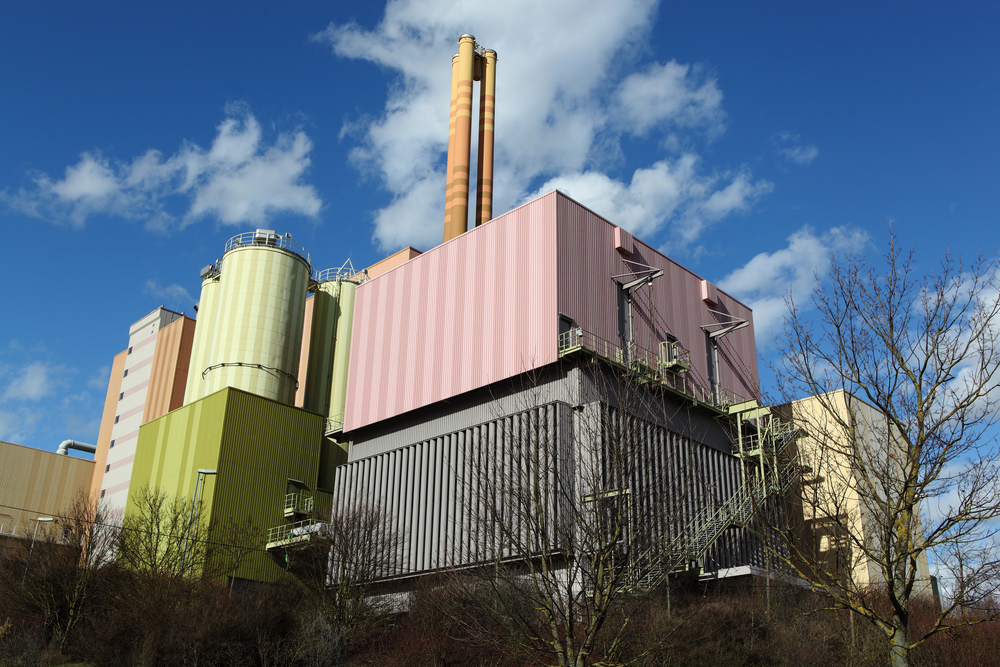 Three key trends that define modern civilization are increased urbanization, rising demand for energy and rapid growth in the amount of municipal solid waste (MSW) that is generated by industrialized societies. However, emerging waste-to-energy (WTE) technologies hold the promise of addressing two of these major issues by utilizing MSW for the efficient production of electricity and heat using both biological and thermal methods. A recent report from Pike Research, Boulder, Colo., forecasts that global revenues from WTE systems will experience strong growth over the next five years, more than tripling in size from $4.2 billion in 2011 to almost $13.6 billion by 2016.
“Waste collected in cities contains a large amount of biological and renewable materials, and it is therefore an important source of renewable energy,” says Pike Research President Clint Wheelock. “As a consequence, energy-from-waste contributes to energy security and diversification and matches the growing demand for renewable energy in a carbon constrained world.”
Wheelock adds that policies, regulations and changing economic conditions are driving the growth of WTE capacity worldwide, creating attractive business opportunities for providers of WTE technologies and related components. Combustion is the primary technology today and is entrenched in the market, yet advanced thermal treatment (ATT) technologies such as plasma arc gasification are now emerging. Moreover, Pike Research’s analysis finds that biological technologies for treating waste offer an attractive alternative to thermal treating methods.
The WTE technology market offers opportunities for turnkey plant and key equipment suppliers, service companies that provide plant operations and maintenance, and engineering companies. Yet, the barriers to enter the turnkey business are substantial. Strong balance sheets to capture high capital-intensive projects and sustain long sales cycles, very reliable technologies and long-standing track records, and in-depth knowledge of market constraints are prerequisites to successfully operate in the market. A handful of specialist companies per region have these capabilities. The market is less constrained for key equipment categories such as air pollution control (APC), and this is also the case in the biological treatment market, where the capacities and the capital requirements of the projects are smaller.
An executive summary of Pike Research’s study, “Waste-to-Energy Technology Markets,” is available for free download on the firm’s website, www.pikeresearch.com.
Repurpose those piles of pallets
April 4th, 2011
 They can be seen behind almost any warehouse in the world, those piles of wooden pallets. It’s hard to predict how many millions are in use in global commerce, but it’s safe to say that many discarded ones end up in landfills if some effort isn’t made to recycle or reuse them.
More so than in the past, businesses are realizing that the bulky wooden pallets that pile up in warehouses don’t need to be pitched with other waste. There are companies that will pick up loads of wood pallets for any of three possible purposes – putting broken pallets through wood chippers to create a mulch product; sorting out the ones that are still in good shape; or fixing damaged pallets for reuse.
“Undamaged pallets that can be restored are collected by pallet recyclers and sold to businesses that require pallets,” says Nate Rosenthal of the Rosenthal Group in St. Charles, Ill., which consults with clients to reduce waste and promote recycling efforts that benefit the company and the environment. “It is not uncommon for a pallet to be used 10 or more times.”
Rosenthal said the business of recycling wooden pallets is facing the same economic pressures as many other recycling efforts. “With the price of fuel playing havoc with the cost of operations, our recycling contractors are beginning to limit the size loads they will accept,” Rosenthal said. “More specifically, many pallet recyclers now require a minimum of 100 pallets before they will dispatch a truck to pick up your pallets.”
Recycling groups or community organizations offer this tip to companies that don’t have many wooden pallets stacking up on them: If you have only a few, just drop add them to the stacks of pallets at a nearby Home Depot and explain that you had a delivery and are just returning them.
In addition to being used for mulch products, Rosenthal said that damaged wooden pallets are often used as firewood in “waste-to-energy” operations.
“Pallets are graded according to condition,” Rosenthal added. “Obviously undamaged pallets are valuable and offer the highest rebates. Pallets with one or two broken boards are considered repairable and have some value. All others are usually scrapped and ground up for mulch.”
One of the other nice “green” features of wooden pallets is that they generally are made from wood that is left over from some other sort of production that is not suited for building or furniture construction. In that regard, they are made from potential waste wood and are already an environmentally friendly product.
Some businesses also list leftover pallets on Craigslist or a local Yahoo group to lure interest from crafters and woodworkers. It is all part of the process to recycle wooden pallets as much as possible, limiting the number of trees cut down to make them, and also keeping a large, bulky item out of our landfills.
 Follow Us on Facebook
 Follow Please Conserve on Twitter
 Subscribe to our RSS Feed
advertisement
advertisement
