

Editorial
ArcelorMittal focused on improved energy management
 July 9th, 2011
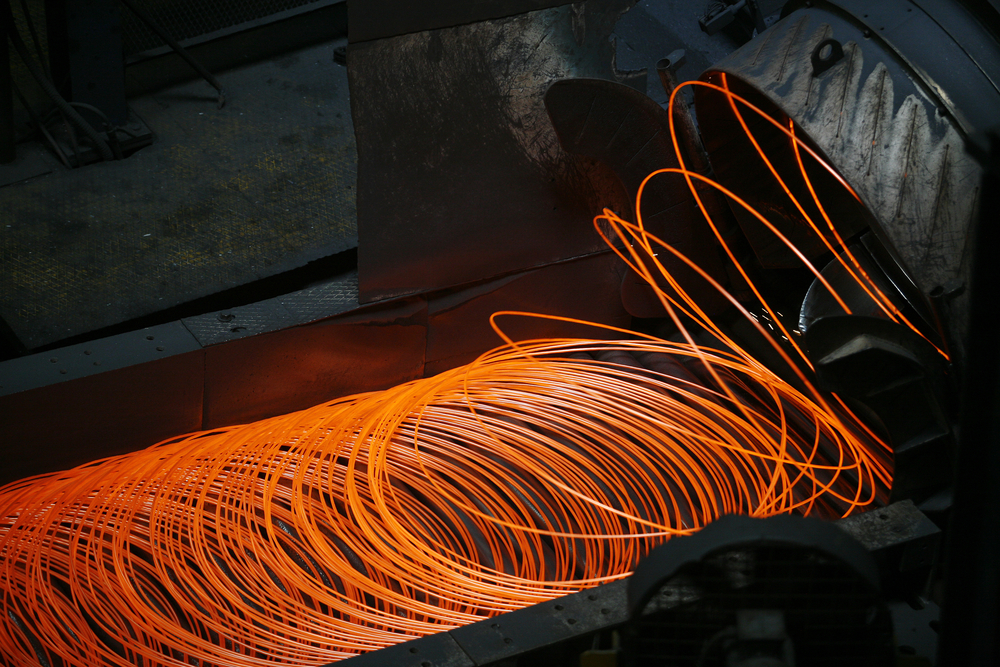 Larry Fabina, energy team coordinator for ArcelorMittal USA in Chicago, says that over the past four years there has been a transformation at the steelmaker, both operationally and culturally, to be more focused on improved energy management. “From the shop floor to the desk space, many employees have become conscious about how energy use affects their day-to-day life at work and at home.”
In the United States, ArcelorMittal has achieved more than $22.7 million in ongoing annual energy savings by implementing 24 projects over the past two years. “The company also expanded the number of sites engaged in its energy program during 2010, with 90 percent of our U.S. sites using the ArcelorMittal Energy Management System model,” Fabina says. In 2008, ArcelorMittal was the first steel company to achieve an Energy Star award, and has done so for four consecutive years.
Last year, ArcelorMittal competed for and was awarded a matching grant of $31.6 million from the U.S. Department of Energy, through the American Recovery and Reinvestment Act, for a project to capture gas flare and reuse it to produce electricity at its Indiana Harbor facility. It also has another ARRA project in the works focused on reducing energy consumption at its Burns Harbor mill.
ArcelorMittal also has set a global goal to reduce greenhouse gas emissions by 8 percent per metric ton of steel by 2020, Fabina adds.
 Author:
  Posted in
SmartHome lives up to its name in a green future
June 30th, 2011
 They start out as a museum exhibit for the curious, providing a look into the future and spreading knowledge about things that capture our imagination.
Chicago’s Museum of Science and Industry has featured a “green home” for visitors to learn about building and living in a truly sustainable home.
Now, the Cleveland Museum of Natural History has opened its PNC SmartHome Cleveland to visitors, providing tours of a home that could represent the future of energy-efficient housing.
PNC SmartHome Cleveland was constructed on museum grounds as part of an exhibition called “Climate Change.”
Conservationists have long felt construction in the United States would do well to consider that a country like Germany has thousands of furnace-free homes built at a “cutting-edge” efficiency standard that features walls more than a foot thick, large triple-paned windows, doors that resemble bank vaults, and other engineering methods that cut cooling and heating costs. It’s a concept known as a “passive house” and has been reported in the media that only about 15 such houses exist in the United States.
But there is one in Cleveland now. And though it currently stands as a museum exhibit, the SmartHome Cleveland will eventually be removed and presented to the public as a property available for purchase as a new home in the Cleveland area.
Designed to function without a furnace, SmartHome Cleveland is reported to be 90 percent more energy efficient than a typical home. It was constructed with sustainable materials and furnishings, advanced stormwater techniques, healthy housing techniques and designed to connect occupants to nature.
Three key elements distinguish “passive house” structures from typical houses: high levels of insulation, with walls up to 18 inches thick; a carefully sealed building envelope with minimal air leakage combined with efficient heat-recovery ventilation for superior indoor air quality; and ultra high-performance windows—at least double-paned and typically triple-paned. The result is a home with no drafts, no cold spots and extremely low heating bills.
The “Climate Change” exhibits will be on display through Dec. 31, 2011, in the museum’s Kahn Hall, but SmartHome Cleveland will be on display only from June to September 2011. SmartHome is funded by PNC Bank, the Cleveland Foundation and various other organizations and donors.
Discovery center illustrates and teaches green living
June 15th, 2011

Constructing a building with conservation and environment in mind is one thing. But having the building serve the purpose of educating future generations about “green living” makes it a win-win for the environmentally conscious.
That philosophy guided the park district in St. Charles, IL, through the design and construction of its Hickory Knolls Discovery Center. A LEED-certified building, Hickory Knolls Discovery Center met a rigorous set of criteria to satisfy the Leadership in Energy and Environmental Design guidelines, and it now invites the public to attend tours and numerous classes or programs at the newly-opened nature facility to learn of the many ways to “go green” — at home, at work, any where, any time.
The discovery center hopes to get people thinking that small changes in habits can lead to positive impacts on our planet, even if it is as simple as starting a home recycling program or converting to CFL light bulbs.
The center itself was planned to be as sustainable as possible, from the installation of plants on the roof to all aspects meeting LEED specifications, which monitor such things as indoor air quality, water efficiency, and CO2 emissions. Developed and administered by the U.S. Green Building Council, a Washington, D.C.-based, nonprofit consortium of building industry leaders, LEED stands for Leadership in Energy and Environmental Design. The program’s guidelines serve to minimize environmental impact of the construction process.
“The entire building in and of itself is an exhibit,” says Pam Otto , Manager of Nature Programs and Interpretive Services. “We want to be a source of inspiration to people who are considering adopting green practices in their own lives.”
Some of the decisions made by the park district included leaving the concrete block and brick walls exposed. “Choosing not to cover them with sheetrock and paint conserved resources,” says Otto, while an integral color concrete floor in many areas of the building did away with the need for carpeting or tile and the inherent adhesive materials necessary for their installation.
Homeowners looking to remodel an existing structure using environmentally-friendly designs and products, or those who are contemplating new construction, could learn much from a center like Hickory Knolls as a source of information and ideas to get any project off to the greenest start possible.
Is your city practicing its own green ideas?
June 7th, 2011
 If the city or village you live in encourages “green living” by promoting recycling programs, rain barrel use, CFL or LED lights, and restrictions on water use during hot summer months, you’d like to know that the city fathers practice what they preach.
A good way to find out would be to determine what sort of green practices are in place at City Hall and other municipal buildings and operations.
Chances are, you will find a “green team” in place at the city level, pushing for conservation through example as much as through educational and marketing campaigns.
In Geneva, IL, a “Green Team” has been assembled with a representative from the various city departments being a part of this panel that studies ways for the city to embrace conservation projects and habits.
But it starts right in their own surroundings, with the City Hall building being upgraded with more energy-efficient equipment — from the HVAC system to the CFL lights on timers replacing incandescent bulbs.
Putting a dishwasher in the City Hall building may sound odd, but it allows plates, glasses and mugs to be cleaned and reused, rather than supplying the building with wasteful paper products, single-use plastic forks, knives and spoons, or even Styrofoam products.
Programmable thermostats in Geneva’s water treatment plant are an example of how most city buildings have been upgraded in an effort to reduce power costs. In another interesting twist, the gas generated from the main digester building that treats waste water is being used to provide fuel to heat exchangers. Rather than ship sludge off to landfills, the high-quality sludge is being used to fertilize farm fields.
The city takes its green measures to the street, literally. Street lighting has been converted from mercury vapor to more efficient high-pressure sodium, and city crews are recycling tree limbs and branches into wood chips, while also recycling scrap metal as a source of revenue.
Ongoing energy audits allow the city to track waste and make improvements in older city buildings.
Last, but not least, don’t be surprised if you see police cruising around your hometowns on a Segway in the future. There would still be squad cars available for emergency response, but fewer of them if the police are making some rounds through town on a Segway – thus saving on fuel costs and lowering greenhouse gases in the environment.
Timken recycles scrap metal and water
May 21st, 2011
 In 2010, The Timken Co., Canton, Ohio, transformed 1.6 million tons of scrap metal—the equivalent of 1.3 million junk cars—into some of the cleanest, strongest steel on earth. This Timken steel was made from nearly 100 percent recycled content, which included 350,000 tons of recycled scrap metal from Timken operations.
“Timken makes a positive impact on the world not only because of the types of products we make, but how we make them,” said Alan Oberster, vice president of environmental, health and safety. “Our steelmaking process is a great example of this. We create value by making products the world needs, and by making our steel out of scrap, we conserve natural resources while putting mountains of waste to good use.”
Oberster added that being green is not new to the company, founded by Henry Timken in 1899, a pioneer in the development of roller bearings that have enabled the energy-efficient operation of vehicles and machinery from horse-drawn wagons to the Space Shuttle.
Timken also demonstrates industry leadership in efforts to reduce energy and waste in its operations:
• In 2010, Timken diverted 20,350 tons of electric-arc furnace dust from landfills, capturing and recycling the dust byproduct of the company’s steelmaking process. Timken’s steel manufacturing relies on energy-efficient electric technology that is a green alternative to blast-furnace or basic-oxygen-furnace methods.
• The company continuously invests in technologies that reduce the amount of electricity needed to produce its steel. Timken has cut the amount of energy needed to produce steel ingots by 27 percent since 1990. Based on 2010 production alone, the electricity saved is enough to power 11 million homes for a day.
• At its Canton steel facilities, Timken recycles 30 million gallons of water waste each day through a closed-loop recycling process, enough to fill 45 Olympic-sized swimming pools.
In recognition of Earth Day, the company has posted videos on the Timken YouTube channel featuring recycling in its steelmaking process and green jobs in the company. A wind turbine animation shows how Timken’s technologies work inside these massive systems to harness the wind’s natural energy. Additional information about the company’s green and corporate citizenship initiatives is available at Timken’s website, www.timken.com.
Celebrating the green benefits of steel
May 12th, 2011
 As the Steel Market Development Institute (SMDI) celebrates the 41st anniversary of Earth Day, investing member companies remind consumers about the sustainability benefits and superior recycling attributes of steel – making it the most cost-effective, durable option for all market applications.
The North American steel industry has invested billions of dollars in new technologies over the past two decades. Expenditures directed towards these investments have had notable results, including reductions in energy consumption, reduced CO2 emissions, a reduced life cycle impact and increased recycling. Since 1990, the industry has reduced energy intensity per ton of steel produced by 30 percent and CO2 emissions by 35 percent.
“Steel is integral to a modern society that enjoys a high quality of life, as we do in America. From the cars we drive to the bridges we cross, steel plays an essential role. It also provides safe packaging for the foods we eat, is a central material in the appliances we use and is the framing structure for the buildings in which we live and work. All of these steels will be recycled and re-appear as even better products, ensuring a safe and secure future,” Lawrence W. Kavanagh, president of SMDI, said. “In addition to being the world’s most recycled material, steel provides consumers with a number of benefits, such as improved fuel economy and reduced emissions in today’s vehicles, up to 40 percent cooling cost savings for buildings with reflective metal roofs, and reliable and recyclable steel utility poles that withstand wind and ice.”Kavanagh concluded that companies that select steel for their products are making the environmentally responsible choice.
SMDI, a business unit of the American Iron and Steel Institute, grows and maintains the use of steel through strategies that promote cost-effective solutions in the automotive, construction and container markets, as well as for new growth opportunities in emerging steel markets. For more information, visit www.smdisteel.org.
Solar, Wind, biofuels markets surge 35 percent to 188.1 billion in 2010
May 5th, 2011
 The overall trend for the clean-energy market continued to be one of growth and expansion in 2010. Combined global revenue for solar, wind power, and biofuels surged 35.2 percent over the prior year, growing from $139.1 billion to $188.1 billion, according to the Clean Energy Trends 2011 report from Clean Edge Inc., a research and advisory firm devoted to the clean-tech sector. The bulk of this expansion came from a more than doubling in global solar photovoltaic installations and steady growth in the biofuels sector. For the first time since Clean Edge began tracking the wind power sector, however, the global wind market witnessed a slight year-over-year decline in market size, in both overall dollars and installations.
This year’s report represents a full decade of Clean Edge data and trends analysis. The full report can be downloaded for free at www.cleanedge.com.
According to Clean Edge research, the global market for solar photovoltaics has expanded from just $2.5 billion in 2000 to $71.2 billion in 2010, representing a compound annual growth rate of 39.8 percent. The global market for wind power has similarly expanded from a global market worth $4.5 billion in 2000 to more than $60.5 billion today, for a growth rate of 29.7 percent.
“As witnessed over the past decade, clean tech has proven to be a significant business opportunity, and its growth rates now rival that of earlier technology revolutions like telephony, computers and the Internet,” said Ron Pernick, Clean Edge co-founder and managing director. “We expect overall growth to slow down in some sectors as the clean-energy market reaches wide adoption and utility-scale deployment, but there’s still considerable room for expansion.”
Clean Energy Trends 2011 includes growth projections for the major clean-energy sectors (solar PV, wind and biofuels), as well as analysis of global clean-tech investment and trends. The report’s key findings include:
• Biofuels (global production and wholesale pricing of ethanol and biodiesel) reached $56.4 billion in 2010 and are projected to grow to $112.8 billion by 2020. In 2010, the biofuels market consisted of more than 27.2 billion gallons of ethanol and biodiesel production worldwide, up from 23.6 billion gallons in the prior year.
• Wind power (the capital cost of new installation) is projected to expand from $60.5 billion in 2010 to $122.9 billion in 2020. Last year’s global wind power installations declined slightly to 35.2 gigawatts, down from a record 37.5 GW the prior year. China, the global leader in new installations for the third year in a row, continued to see strong growth with total new installations of more than 16 GW, an increase of 27 percent. The U.S., the world’s second-largest market, declined after record growth in 2009, adding only half as much capacity as the prior year with just 5 GW installed in 2010.
• Solar photovoltaics (including modules, system components and installation) are projected to grow from a $71.2 billion industry in 2010 to $113.6 billion by 2020. New installations reached more than 15.6 GW worldwide in 2010, a more than doubling from 7.1 GW in 2009, representing the largest year-over-year increase on record.
• According to data provided by the Cleantech Group, U.S.-based venture capital investments in clean tech increased 46 percent from $3.5 billion in 2009 to $5.1 billion in 2010. Clean Edge analysis found that clean-tech’s percentage of total U.S. venture capital investments continued to rise, accounting for a record 23.2 percent of total U.S. venture activity in 2010.
The report also outlines five key trends that will impact clean-energy markets in the coming years: the phase-out of incandescent lights replaced by low-cost LEDs, advances in natural gas, cleaner aviation fuels, low-cost green buildings and innovative alternatives to rare earths.
This sustainable community provides blueprint for future projects
May 2nd, 2011
 In the not-too-distant future it’s possible, and even likely, that new subdivisions or “sustainable community” developments will follow a blueprint similar to Serosun Farms in Hampshire, IL.
This residential development located on 410 acres in Kane County and about 65 miles west of Chicago features custom homes that emphasize environmentally sustainable living.
But it also offers surroundings that fit right in with that concept, giving the title of “sustainable community” some significant meaning, while establishing what many believe will be a growing trend.
The buyers of these homes will be working closely with the developer, John DeWald & Associates, when discussions take place about design and construction. Architects and builders at Serosun Farms incorporate passive design elements that take into effect wind and sun patterns.
Another key green feature is a rainwater collection system, and geothermal heating and cooling.
With the homebuilders focusing on building and design aspects that aid the environment, those who live in the community will notice plenty of other “green” aspects will become part of daily life.
The community offers a farmer’s market with fresh produce, flowers, free-range poultry, grass-fed beef and other specialty items.
Wildlife habitats and prairie restoration will be incorporated into the grounds and surrounding areas.
Hay will be produced to support an equestrian center in the community, while permeable driveways and prairie grasses will ease rainwater runoff.
Residents will have access to community garden plots, allowing them the option of growing their own vegetables and fruits.
Waste-to-energy market to triple by 2016
April 12th, 2011
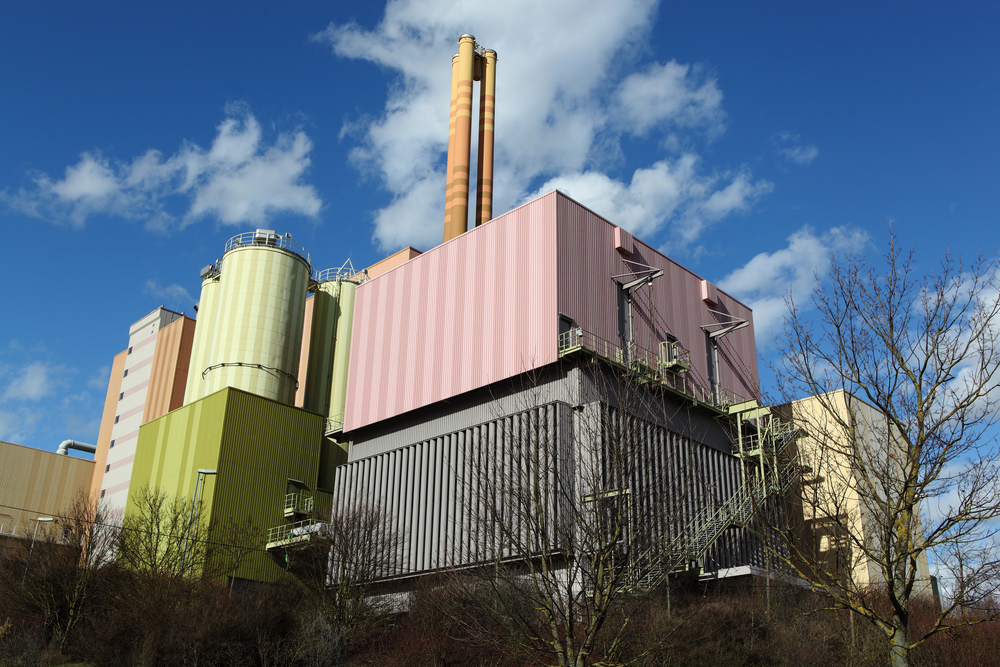 Three key trends that define modern civilization are increased urbanization, rising demand for energy and rapid growth in the amount of municipal solid waste (MSW) that is generated by industrialized societies. However, emerging waste-to-energy (WTE) technologies hold the promise of addressing two of these major issues by utilizing MSW for the efficient production of electricity and heat using both biological and thermal methods. A recent report from Pike Research, Boulder, Colo., forecasts that global revenues from WTE systems will experience strong growth over the next five years, more than tripling in size from $4.2 billion in 2011 to almost $13.6 billion by 2016.
“Waste collected in cities contains a large amount of biological and renewable materials, and it is therefore an important source of renewable energy,” says Pike Research President Clint Wheelock. “As a consequence, energy-from-waste contributes to energy security and diversification and matches the growing demand for renewable energy in a carbon constrained world.”
Wheelock adds that policies, regulations and changing economic conditions are driving the growth of WTE capacity worldwide, creating attractive business opportunities for providers of WTE technologies and related components. Combustion is the primary technology today and is entrenched in the market, yet advanced thermal treatment (ATT) technologies such as plasma arc gasification are now emerging. Moreover, Pike Research’s analysis finds that biological technologies for treating waste offer an attractive alternative to thermal treating methods.
The WTE technology market offers opportunities for turnkey plant and key equipment suppliers, service companies that provide plant operations and maintenance, and engineering companies. Yet, the barriers to enter the turnkey business are substantial. Strong balance sheets to capture high capital-intensive projects and sustain long sales cycles, very reliable technologies and long-standing track records, and in-depth knowledge of market constraints are prerequisites to successfully operate in the market. A handful of specialist companies per region have these capabilities. The market is less constrained for key equipment categories such as air pollution control (APC), and this is also the case in the biological treatment market, where the capacities and the capital requirements of the projects are smaller.
An executive summary of Pike Research’s study, “Waste-to-Energy Technology Markets,” is available for free download on the firm’s website, www.pikeresearch.com.
Park district’s building project lauded for sustainability and green practices
March 30th, 2011
 The term “retrofitting” has become common in a world in which older buildings are being remodeled and rehabbed in a way that brings more “green” into them to conserve energy or water.
These building makeovers could occur in residential or commercial areas, but also for older buildings that become recreational or office centers used by park districts and cities.
But even if new construction unfolds on the site of an existing building, it can be done with much of the material from that existing building and incorporate numerous “green” facets into the process.
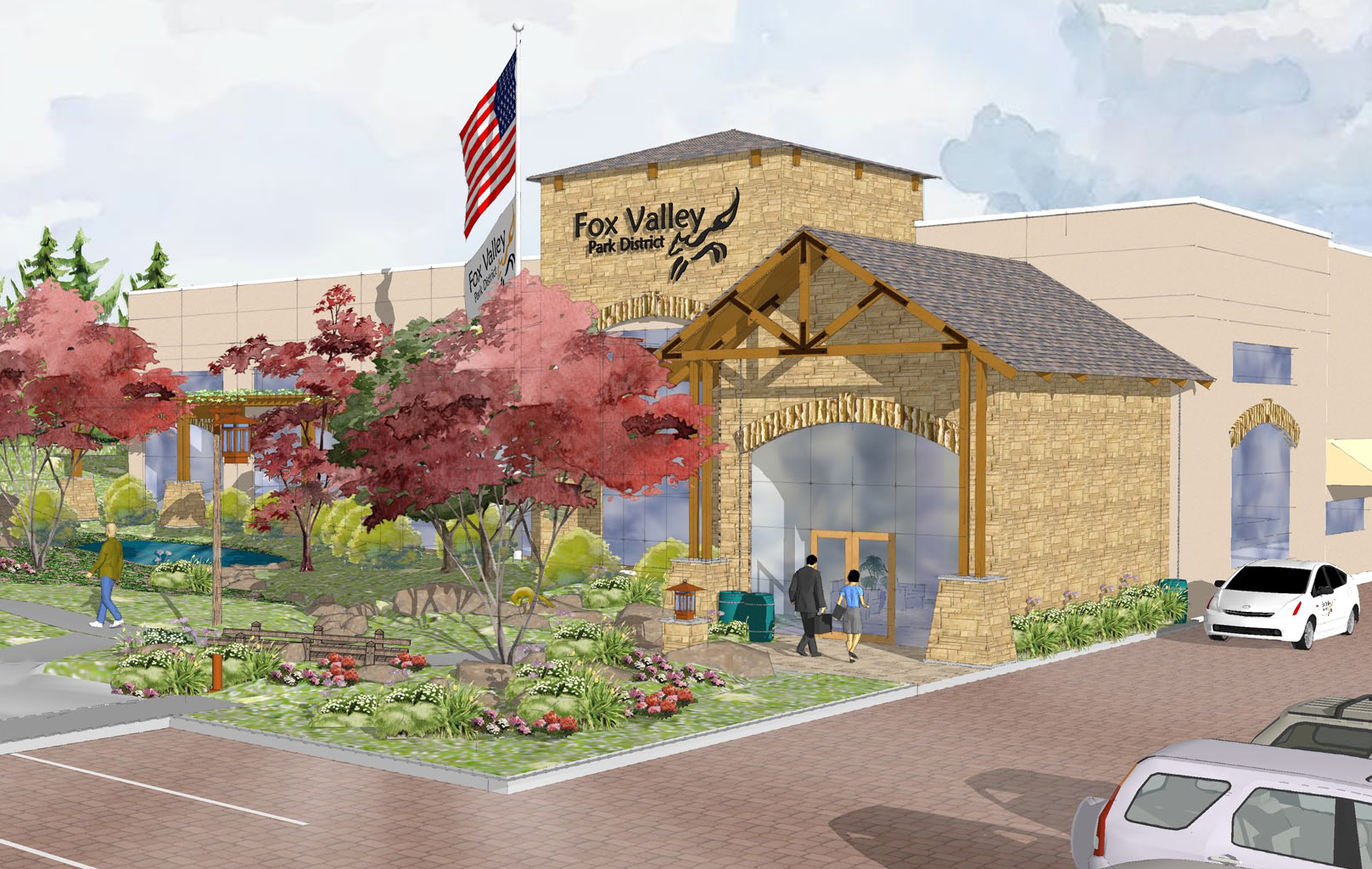
One such building used by the Fox Valley Park District in Aurora, Ill., has been honored for its environmentally friendly practices.
The Conservation Foundation presented the park district with the 2011 Sustainable Development Award in honor of its new Cole Center building.
The district had consolidated all of its park, maintenance and administration operations into the Cole Center building in the fall, but completed numerous sustainable upgrades and modifications prior to the consolidation.
“This award goes to a business or agency that best demonstrates environmentally friendly practices in its development projects,” said Brook McDonald, president and CEO of The Conservation Foundation. “With all of its sustainable features, the Cole Center is model structure that meets or exceeds the highest environmental standards.”
The Fox Valley Park District reports that the Cole Center has more than 100 environmentally friendly highlights – such as a rainwater harvesting system for vehicle washing, LED lights that use 75 percent less electricity than fluorescents and parking lots built with permeable pavers. By developing the center from an existing building, the park district was able to reduce its carbon footprint by reusing, restoring, recycling and reinvesting.
Other highlights of the building include:
*Contractors were required to divert waste from landfills and maximize recycling of construction and demolition debris.
* Steel stairs, acoustical wall panels and concrete retaining wall blocks were salvaged from the existing building and saved for reuse in new construction.
* Many products specified for use in the Cole Center construction contain high levels of either pre-consumer or post-consumer recycled material content, such as concrete, structural steel, ceramic tile, carpet tile and cast stone.
* Wood-based products were manufactured using sustainably harvested wood materials, not from old-growth timber.
* Office areas have multi-level lighting to allow at least 50 percent light reduction while maintaining uniform lighting levels throughout the building.
* The facility design is based upon the natural and native elements of the nearby Fox River shoreline, featuring stone, wood, water and heavy timber.
* Landscaping that does not require permanent irrigation systems.
* An energy-efficient, direct-fired heating system for a large garage area, and a high-efficiency water heater.
 Follow Us on Facebook
 Follow Please Conserve on Twitter
 Subscribe to our RSS Feed
advertisement
advertisement
